
19/10/2026 20:28
What Should Your Umbrella Demo Answer? TikTok Search Research for Cambodian Shops

A Cambodian umbrella shop can film attractive products all afternoon and still leave a shopper’s main question unanswered: will this umbrella fit inside the bag they carry every day? Search research gives the shop a way to investigate that question before choosing its next demonstration. TikTok’s Creator Search Insights can provide starting points where the tool is available, but the shop must supply the local context, product knowledge and honest answer. This workflow connects research to a practical filming decision. It also explains why purchasing panel engagement cannot establish that a topic matters to Cambodian customers or that a demonstration helped someone choose.
1. Begin with a decision the shopper needs to make
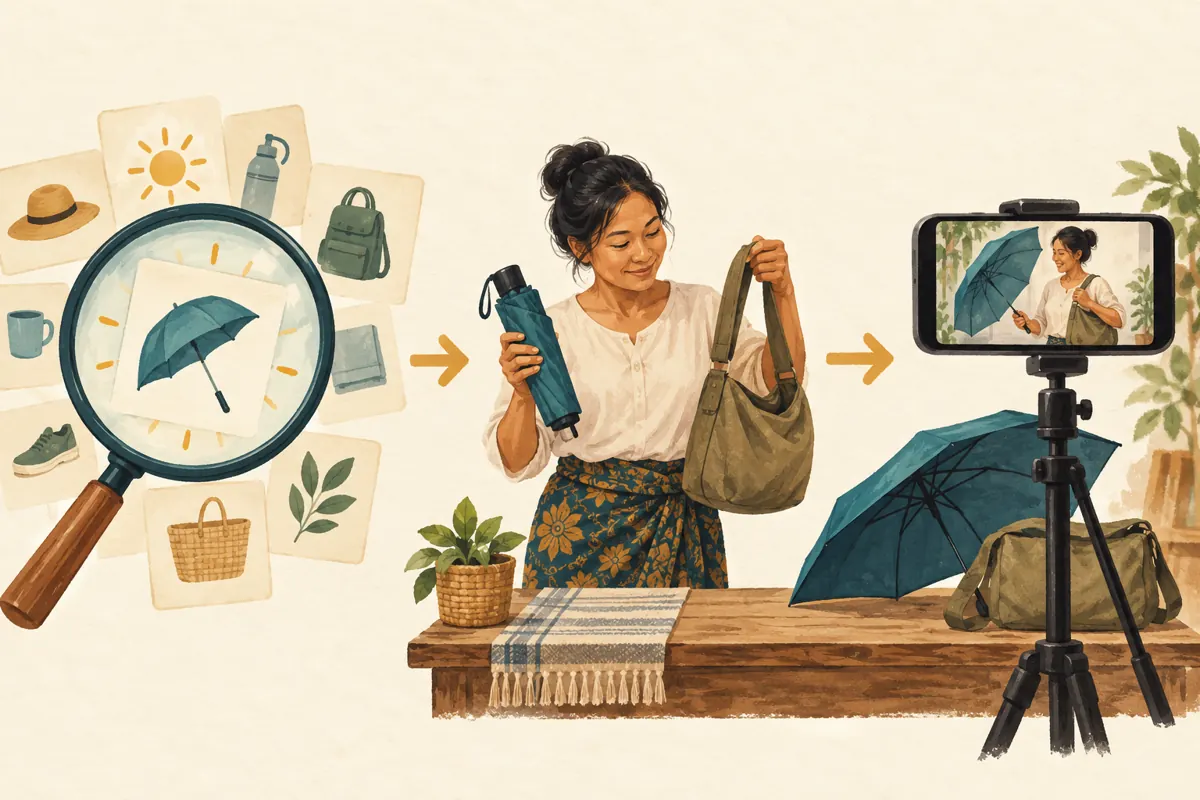
Consider a hypothetical umbrella retailer in Phnom Penh. Its shelves contain compact folding umbrellas and longer models, while customers ask whether particular items fit inside shoulder bags. The owner is considering another colour showcase. A more useful starting question is whether the next video should demonstrate folded size, opening technique or storage after use. Each question requires different footage, so deciding first prevents a beautiful but incomplete demonstration.
Write the intended viewer decision in one sentence: someone should be able to judge whether the demonstrated folded umbrella is worth checking against their own bag. This is narrower than selling every umbrella in the shop. It gives the team a visible task and a clear stopping point. The video succeeds as an explanation when viewers understand what was tested and what they still need to measure, even if they choose a different product.
2. Check whether Creator Search Insights is available
TikTok’s official introduction describes Creator Search Insights as a tool for discovering searched topics, including content gaps: topics searched often but represented by relatively few videos. It describes access by searching for “Creator Search Insights” inside TikTok. The announcement specifies selected regions, so Cambodian businesses should check their own account rather than assume access. If the tool appears, begin with a relevant product topic and inspect the suggestions available.
If it does not appear, continue with ordinary topic research: search a question manually, examine the results you can see, and compare them with questions your shop actually receives. Label those notes as manual observations. Do not present them as measured search volume or a comprehensive picture of TikTok. Likewise, a content-gap label is a reason to investigate an explanation, not a promise that your shop’s video will rank or attract local buyers.
3. Translate the question into a Cambodian shopping situation
A broad topic such as compact umbrellas can describe many needs. A tourist packing luggage, a student carrying books and a shop assistant commuting with a small bag may all want different demonstrations. Choose the situation your business can genuinely serve. For the hypothetical Phnom Penh retailer, bag fit is relevant because staff already hear that question and can demonstrate the stocked model without guessing about its performance.
Keep the wording customers use alongside your internal English planning notes. Ask a Khmer-speaking staff member to check whether the proposed question sounds natural and preserves the intended distinction between folded size and canopy size. Do not assume that an English phrase is how Cambodian viewers search. If a product has an established model name, retain it accurately, but explain its practical meaning. Geographic relevance comes from the actual situation and service area, not from inserting Cambodia into every sentence.
4. Choose the demonstration with three practical checks
Before approving a topic, check product availability, demonstrability and usefulness. Availability means the exact model is present and staff know which variation appears on camera. Demonstrability means the shop can answer the question with an observable action. Usefulness means the answer could change a shopper’s choice. An umbrella beside a bag can meet all three checks; an unsupported claim about surviving extreme wind cannot be established by an ordinary tabletop demonstration.
Use a simple decision rule. Film now when all three checks pass. Investigate first when a measurement, product specification or stock detail is missing. Set the topic aside when it requires a claim the shop cannot support. This rule keeps a fashionable search suggestion from consuming the filming session merely because it appears interesting. Record the reason for choosing the topic so another employee can understand why the team selected this demonstration.
5. Film the answer, including the awkward part
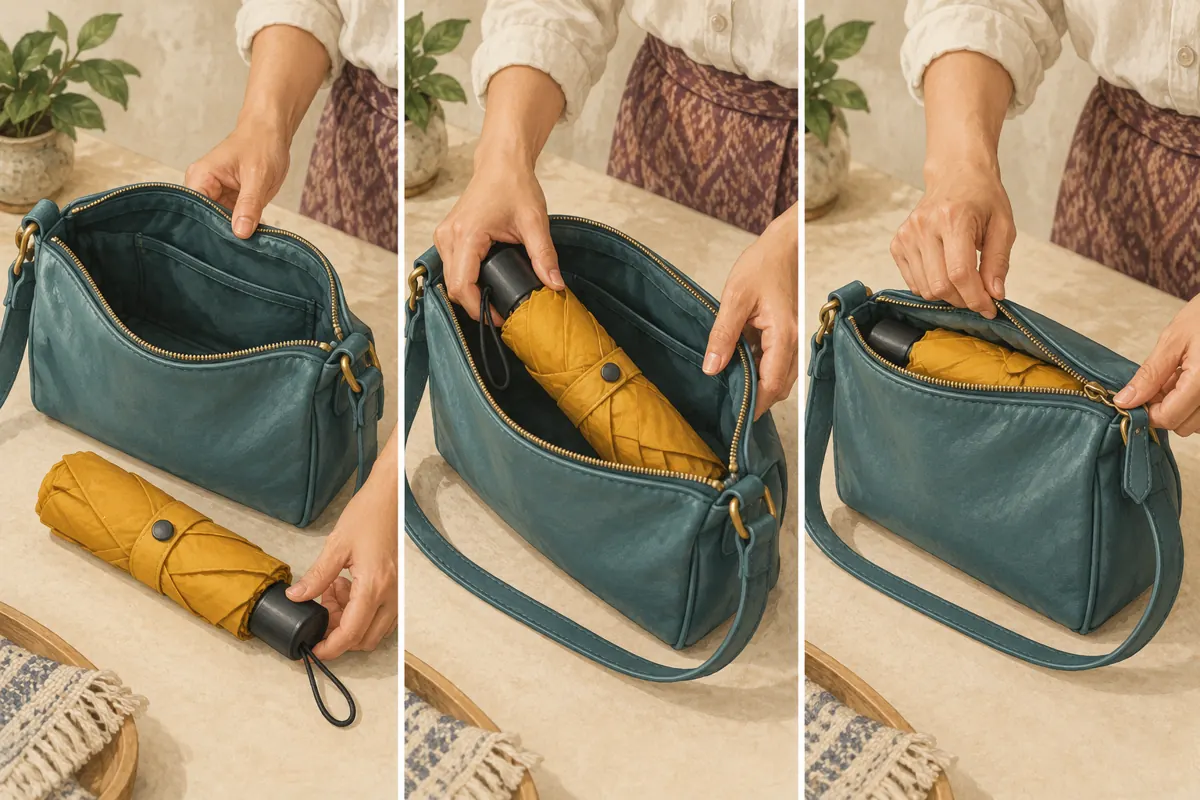
For the hypothetical bag-fit video, prepare the folded umbrella, its usual sleeve and an everyday shoulder bag. Show the umbrella beside the bag, place it inside, and then show whether the bag closes normally. Keep the relevant action visible instead of cutting directly from an empty bag to a finished result. State that this is the particular bag and umbrella being demonstrated. A successful fit does not establish compatibility with every bag sold under a similar description.
If the zipper catches or the handle leaves too little room for other items, include that limitation. You can then demonstrate another stocked option, clearly identifying the change. Avoid forcing the zipper to manufacture a positive result. Record any measurements from the actual objects and check them before adding captions. Finish with a practical next step: compare the folded length and bag opening, or ask the shop to check a specific model. Do not encourage customers to post private belongings or personal details publicly.
6. Package the post around the same question
The opening shot, spoken explanation and caption should all describe the fit test. An opening that promises the strongest umbrella changes the question and demands evidence your footage does not provide. Use the relevant product wording naturally, then explain the result. A short caption can identify the demonstrated model, clarify that bag dimensions vary, and tell viewers how to request current availability. Check the response route yourself before inviting enquiries.
TikTok’s commercial-content guidance requires the disclosure setting when promoting a brand, product or service, including your own business. Its help page explains that promoting your own business is labelled Promotional content. Select the option that accurately describes the relationship. Separately, have someone watch the finished clip on a phone with sound off, then with sound on. They should be able to identify the product, understand the physical result and distinguish a demonstrated fact from a sales suggestion.
7. Keep the panel decision separate from the research
An SMM panel catalogue describes offers; it does not validate a content idea. One supplied public listing is “TikTok - Followers ~ Bot ~ Max 5M ~ 10k-50k/day ~ Instant ~ 𝐍𝐎 𝗥𝗘𝗙𝗜𝗟𝗟”. Its title identifies a follower offer labelled Bot. The brief supplies no supporting description. Treat the remaining wording as catalogue claims, not verified delivery conditions, audience characteristics or a recommendation. It provides no basis for assuming Cambodian shoppers, purchase intent or official TikTok affiliation.
TikTok’s Community Guidelines prohibit the trade of services that artificially boost engagement or manipulate its recommendation system. A panel listing does not override those rules. Do not use artificial engagement as the research method for this workflow. Purchased engagement is not evidence of genuine interest, sales, ad delivery or Cambodian users. If earlier panel activity exists, retain its records separately and acknowledge that it limits what can be inferred from affected counters. Budget for clearer filming, accurate language and enquiry handling instead of treating a higher count as validation.
8. Record evidence in three separate places
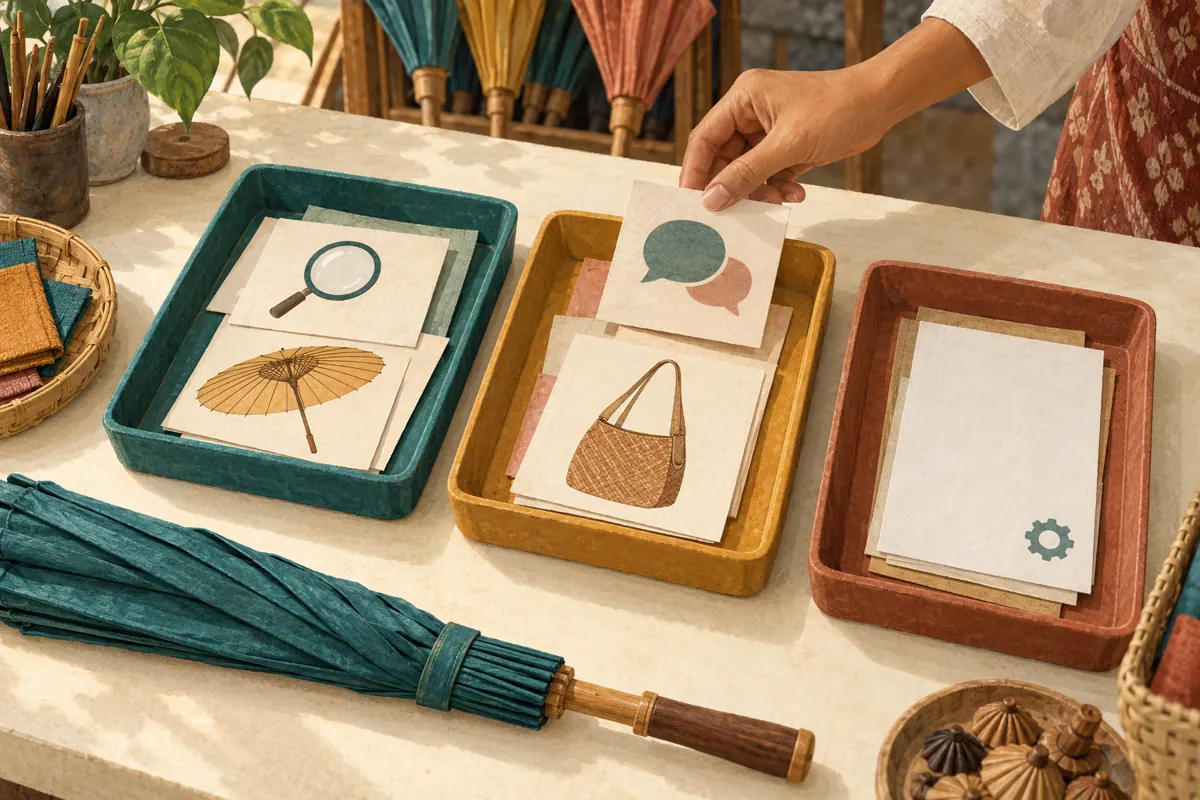
Maintain a research note, a post note and an enquiry note. The research note holds the observed topic, date, wording and reason it fits the shop. The post note identifies the published video and the actual demonstration. The enquiry note captures useful questions such as whether another stocked umbrella fits a narrower bag. These can be three columns in an existing document; the value comes from preserving the distinctions, not from buying another reporting tool.
Record only what you can establish. If a customer mentions the demonstration, note that connection without claiming the video caused a sale. If they arrive through an unclear route, mark the source unknown. Keep customer contact details out of general editorial notes. Any panel order record belongs in its own operational history, even when it references the same post. A completed service order and a genuine question about bag dimensions answer entirely different business questions.
9. Review whether the explanation resolved the uncertainty
Choose a review date before posting so the team does not react to every early fluctuation. Read the questions that arrive and check the post information your account makes available. Ask whether people understood the demonstrated model and limitation. If viewers repeatedly ask whether the umbrella was inside its sleeve, the next improvement may be one clearer shot. If they ask about a different bag shape, that may justify a separate demonstration.
Do not turn silence into a firm conclusion. Few enquiries could reflect limited exposure, an unclear invitation, unsuitable stock or simply little interest; the post alone cannot identify the cause. Make one practical revision at a time and write down why. Keep a useful demonstration available for staff to share when the same question arises, even if it produces no dramatic public response. Its value may include making a future conversation more precise.
10. Catch the mistakes that make search research misleading
The first mistake is mistaking a topic for a customer request. A suggestion about travel umbrellas does not show that local shoppers want your particular model. The second is copying another creator’s test without checking whether their product, bag or claim matches yours. Use search results to identify questions, then create your own footage and explanation. The third is selecting a popular phrase first and stretching the product description until it appears to fit.
Another mistake is changing several things and attributing every difference to the search topic. A new model, different language, clearer lighting and changed promotion all complicate comparison. Describe what changed rather than claiming a ranking formula. Finally, do not keep promoting a demonstration as a current buying option when the model is unavailable. Staff should distinguish a useful size explanation from an offer they can fulfil today and provide an accurate alternative when appropriate.
Frequently asked questions
What if Creator Search Insights is missing from our account?
Use manual searches and questions received at the shop to build a small topic list. Record where each idea came from. Do not describe manual observations as Creator Search Insights data, and do not invent a Cambodian availability claim. The product demonstration can still be useful without access to the tool.
Should we copy the exact search phrase into every part of the post?
Use wording that accurately describes the question and sounds natural to your viewers. Repetition cannot repair an unclear demonstration. If an English topic inspires a Khmer video, preserve the meaning and product distinction rather than forcing the English phrase into every caption or spoken sentence.
Can panel followers prove that the topic attracted Cambodian buyers?
No. A follower counter does not establish location, shopping intent or a causal connection to the video. Purchased engagement cannot supply that evidence. Evaluate actual questions and confirmed customer interactions separately, and observe TikTok’s rules against artificial engagement.
Is a video showing that an umbrella does not fit still worth posting?
Yes, when the limitation is clear and relevant. It can help shoppers avoid choosing the wrong size. Identify the particular objects tested, avoid generalising to all bags, and show an alternative only when you can accurately distinguish it and confirm its availability.
Explore the current service catalogue, create an account, or ask a specific question through support tickets.
- TikTok Newsroom: Get inspired with Creator Search Insights
- TikTok Help Center: Promoting a brand, product, or service
- TikTok Community Guidelines
Prepared with AI assistance. Illustrations explain the workflow and do not represent customer results.