
20/10/2026 12:20
Which Entrance Should Customers Use? Telegram Pickup Locations for Cambodian Repair Shops
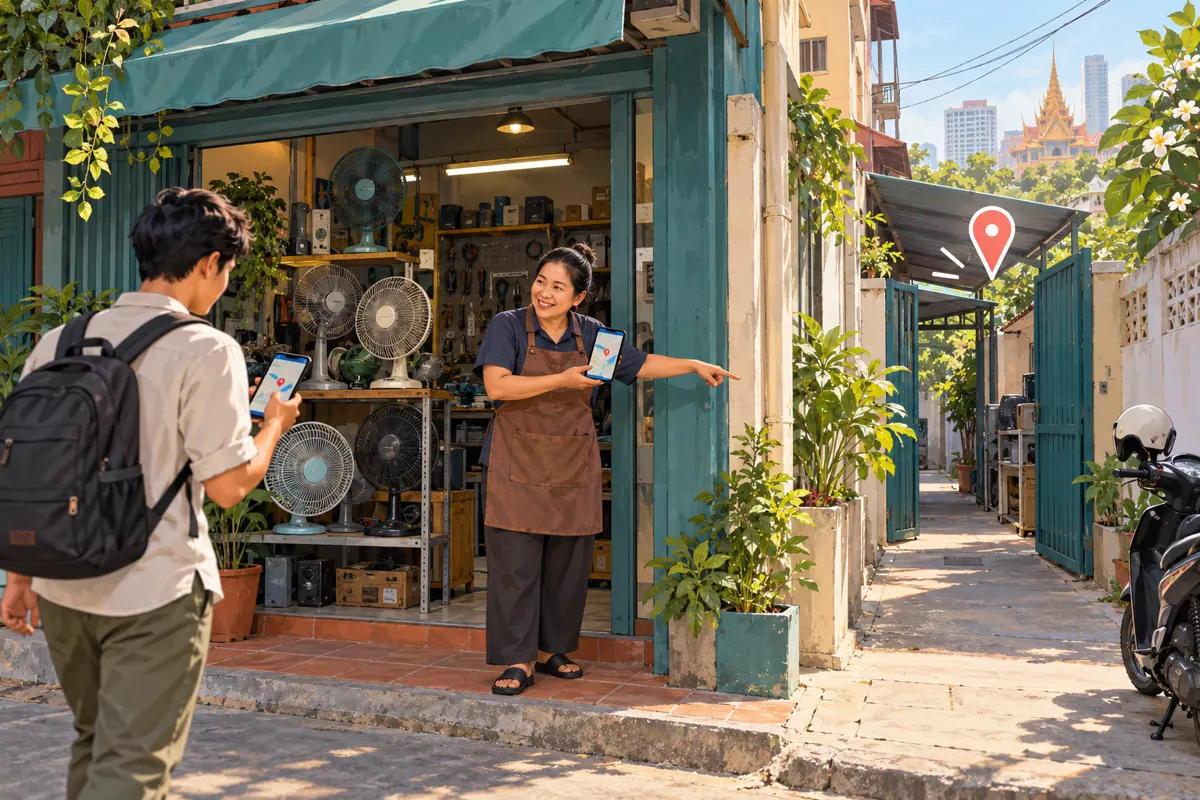
A repair demonstration can explain your work perfectly while leaving customers unsure where to collect their appliance. A map may identify the building, but the usable entrance could face another street or sit beside a closed service gate. For Cambodian businesses promoting repairs through Telegram, those final directions deserve the same attention as the promotional post. This workflow helps a shop prepare a fixed pickup location, pair it with a recognisable entrance photo, and test the instructions before inviting more enquiries. It also explains where SMM panel records belong: separately from evidence that customers found the shop, collected an item or purchased a service.
1. Define the arrival problem before changing the promotion
Consider a hypothetical fan-repair shop in Phnom Penh. Its workshop occupies a long building with a customer counter at the front and a service gate down a side lane. Someone watching its repair video asks for directions. A staff member sends the position of their phone from inside the workshop, and the customer reaches the service gate. The building is correct; the arrival instructions are incomplete. This is a fictional example, not a reported customer result.
Start by writing the exact destination a visitor needs: the customer collection counter, the assessment desk or an agreed delivery handover point. Ask staff which misunderstanding occurs, rather than assuming every directions question reflects a bad map. Customers may need to know which branch holds their item, whether collection is confirmed or which doorway is open. Resolve that question before spending more effort distributing the post.
2. Choose a fixed destination for an ordinary shop visit
For routine collection, prepare a fixed shop-location message. In Telegram's attachment menu, open the location option and inspect the place you intend to send. Check the map at a useful zoom level before confirming. Avoid automatically accepting your phone's current position when you are working at the back of the property or preparing messages elsewhere. If the destination cannot be selected accurately on your device, resolve that uncertainty before sharing it.
A fixed location describes where the customer should go. A live location describes a person's changing position. Telegram's official Live Locations documentation explains this distinction and its location-sharing controls. Neither format explains which door accepts customers. Add that instruction separately. Treat the map as one part of the message, alongside the entrance description and a contact method for anyone who still cannot identify the shop.
3. Build an entrance reference that survives a small screen
Take a current photograph from the approach a visitor is likely to use. Include the doorway, its immediate surroundings and one distinctive feature that actually remains there. A permanent awning or fixed sign is generally more dependable than a parked vehicle. If the building has several entrances, frame the customer entrance clearly without making another door appear equally plausible. Check the image on a phone before adding it to your directions.
For the hypothetical shop, a useful reference might show the teal front doors and a large plant pot, with the customer counter visible inside. The accompanying sentence should identify the street-facing entrance and explain that the side gate is for workshop access. Use descriptions customers understand in their preferred language. Avoid relying only on colour, since lighting and similar neighbouring shops can make it ambiguous. Remove visible customer paperwork and unrelated personal details from the photograph.
4. Send a compact pickup message with a clear next action
Arrange the information in the order the customer needs it: confirm the correct branch, send the destination, show the entrance, and explain what to do on arrival. Keep repair status separate from directions. Receiving a map should not imply that an appliance is ready. Staff should confirm collection against the repair record before telling the customer to travel. Likewise, a shop's general opening hours do not automatically confirm a particular pickup appointment.
A hypothetical message could read: “Your fan is ready for the collection time we agreed. Use the street-facing teal doors shown in this photo. The side gate is workshop access. Message this chat if you cannot identify the entrance, and have your repair reference ready at the counter.” Send the checked location with that message. Adapt the wording to actual arrangements; do not promise immediate handover if staff still need to locate or test the item.

5. Test the directions with someone who does not know the entrance
Ask a colleague unfamiliar with the collection route to try the message from a nearby public starting point. Have them open the location and identify the doorway using only the material a customer would receive. They should stop safely before checking their phone. Do not coach them through the confusing part: the purpose is to discover what the message fails to explain. Record where they hesitate and what additional information they request.
Distinguish a map problem from an instruction problem. If the map identifies the wrong property, correct the destination. If it identifies the property but the tester chooses the service gate, revise the entrance photo or sentence. If they arrive correctly but find nobody available, review the collection arrangement. These are different fixes. Run another focused check after the correction, especially when the first test revealed a wrong destination or an inaccessible entrance.
6. Reserve live location for a specific meeting need
Live location can be useful when two people are trying to meet and one is moving. It is usually unnecessary when the customer simply needs a stable shop address. Telegram documents sharing live location through the attachment menu and stopping an active share. If a customer chooses to use it for a difficult handover, agree which chat will receive it and choose a suitable available duration. Stop sharing when coordination is finished.
Do not make live tracking a condition of an ordinary pickup. Offer the fixed destination, entrance photograph and a text-based fallback first. Keep any person-specific coordination in the intended conversation rather than a public promotional channel. If a customer cannot load the map, ask which nearby public landmark they can identify; they should not need to disclose their home address to obtain shop directions.
7. Connect promotional posts to the checked destination
Once the arrival instructions work, give the promotion a practical next step. A fan-cleaning demonstration might invite viewers to ask whether their model can be assessed and request the shop's checked location. Keep that invitation relevant to the service shown. Do not combine a useful repair explanation with an unrelated demand to join several channels before receiving directions. The next action should help someone decide whether a visit is appropriate.
Telegram's official Business announcement documents a profile location feature that lets businesses show their location on a map. If your account has that feature available, check it against the destination used in staff messages. A profile map and a privately sent location should not point to different branches. A regular location message remains useful for a specific conversation. Assign one staff member to review the shared reference whenever the entrance, branch or collection arrangement changes.

8. Decide whether an SMM panel service addresses the problem
A directions problem is a poor reason to order a member service. The supplied SMMVR catalogue includes the exact public title “Telegram Members ~ Max 20k ~ 10k/Days ~ Instant ~ 𝗥𝗘𝗙𝗜𝗟𝗟 45D”. This identifies a Telegram member offering by its name; the supplied description is empty. Its title does not establish suitability for a particular destination, Cambodian audience origin, genuine customer interest or verified delivery performance. Treat the numeric and refill wording as catalogue labels requiring review, not independently confirmed promises.
Before considering an order, identify the actual unmet need. Unclear directions call for better directions. Too few relevant enquiries call for reviewing the offer, distribution and audience fit. Purchased engagement is not evidence of genuine interest, sales, ad delivery or Cambodian users. If a service is still being evaluated, review its current terms and applicable platform rules. Do not interpret a larger member count as proof that more local people can find the pickup counter.
9. Measure arrival clarity without inventing attribution
Keep a modest operational log of direction-related questions. Useful categories include wrong branch, wrong entrance, map unavailable, collection time unclear and directions resolved. Record only what staff can support from the conversation. A customer saying they found the entrance is evidence about that visit. It is not evidence that a panel order caused the visit, that everyone understands the message or that a particular post generated a sale.
Review the wording of repeated questions before redesigning the whole promotion. If several enquiries mention the side gate, the entrance distinction may still be weak. If customers ask whether repairs are complete, the pickup message may be arriving before confirmation. Where panel activity overlaps with promotion, keep its order and delivery records separate from enquiries and collections. Explain the overlap in reporting rather than assigning every later improvement to the service. A small, clearly described observation is more useful than an unsupported success claim.
10. Correct stale directions wherever customers encounter them
Common mistakes include reusing an old entrance photograph, sending a staff member's present position instead of the destination, and assuming a familiar landmark needs no explanation. Another is placing correct directions beneath a long promotional message where a customer cannot quickly locate them. Keep the arrival information compact and recognisable. If the shop temporarily changes access, state which entrance is available and confirm the arrangement before inviting someone to travel.
When directions change, check the places your team actually uses: the business profile, reusable message text, public pickup posts and active customer conversations. Previously forwarded material may still circulate, so clearly correct affected customers rather than assuming one edited reference reaches everyone. Retest the changed route when practical. The aim is a dependable handover from online interest to an appropriate shop visit, with a destination that staff can explain and a customer can recognise.

Frequently asked questions
Should every promotional post include the shop location?
Include it when visiting is a sensible next action, such as an invitation to bring an appliance for assessment. Some posts first need to establish service suitability. In those cases, invite a relevant question and provide checked directions once the correct branch and visit arrangement are clear. Avoid presenting a location as confirmation that an item is ready.
What if the map reaches the building but customers choose the wrong door?
Keep the accurate building destination and improve the entrance reference. Show the correct doorway from the visitor's approach, name a stable distinguishing feature and explain any misleading service gate. Test that revision with an unfamiliar person. Moving the pin repeatedly may not solve a problem caused by an unclear photograph or missing access instruction.
Do customers need to share live location to collect a repair?
No. A fixed destination and clear entrance instructions should support an ordinary collection. Live location is an optional coordination tool when a specific meeting requires it. Provide another way to ask for help, and avoid requesting personal movement information merely because the feature is available.
Can a Telegram member order demonstrate that the promotion reached local buyers?
No. A member count does not establish where people live, why they joined or whether they intend to buy. Assess local enquiries from information customers voluntarily provide, and verify visits or collections through normal shop records. Do not describe purchased engagement as customer endorsement or use it to claim that the directions workflow produced sales.
Explore the current service catalogue, create an account, or ask a specific question through support tickets.
Prepared with AI assistance. Illustrations explain the workflow and do not represent customer results.