
20/10/2026 09:07
Which Knot Needs Help? YouTube Start-Time Links for Cambodian Macramé Workshops

A customer has bought a macramé kit from your Cambodian workshop and cannot follow one part of the lesson. Sending the entire video again leaves them searching for the same confusing movement. A more useful reply identifies their problem, points them to a suitable starting moment and explains what to watch. This article develops that workflow through a hypothetical Phnom Penh craft business selling cord kits and beginner classes. It also explains where SMM-panel decisions belong: a service listing cannot establish that someone understood a knot, wanted a class or became a customer.
1. Identify the question before choosing the moment
Begin with the customer's obstacle, rather than the name of your newest video. Someone asking why their pattern twists may need a different explanation from someone asking how to attach the first cord. Ask which kit they have and what they were trying to do when the difficulty appeared. When useful, request a close photograph of the craft itself, without faces, addresses or other personal details.
In our hypothetical workshop, a buyer says the second row looks different from the demonstration. The staff member first checks whether the buyer is following the wall-hanging kit or a different project. Only then do they choose a lesson. This small diagnostic step prevents a polished but irrelevant response. It also gives the business useful editorial information: repeated questions about the same movement may justify a clearer demonstration.
2. Choose an entry point with enough context
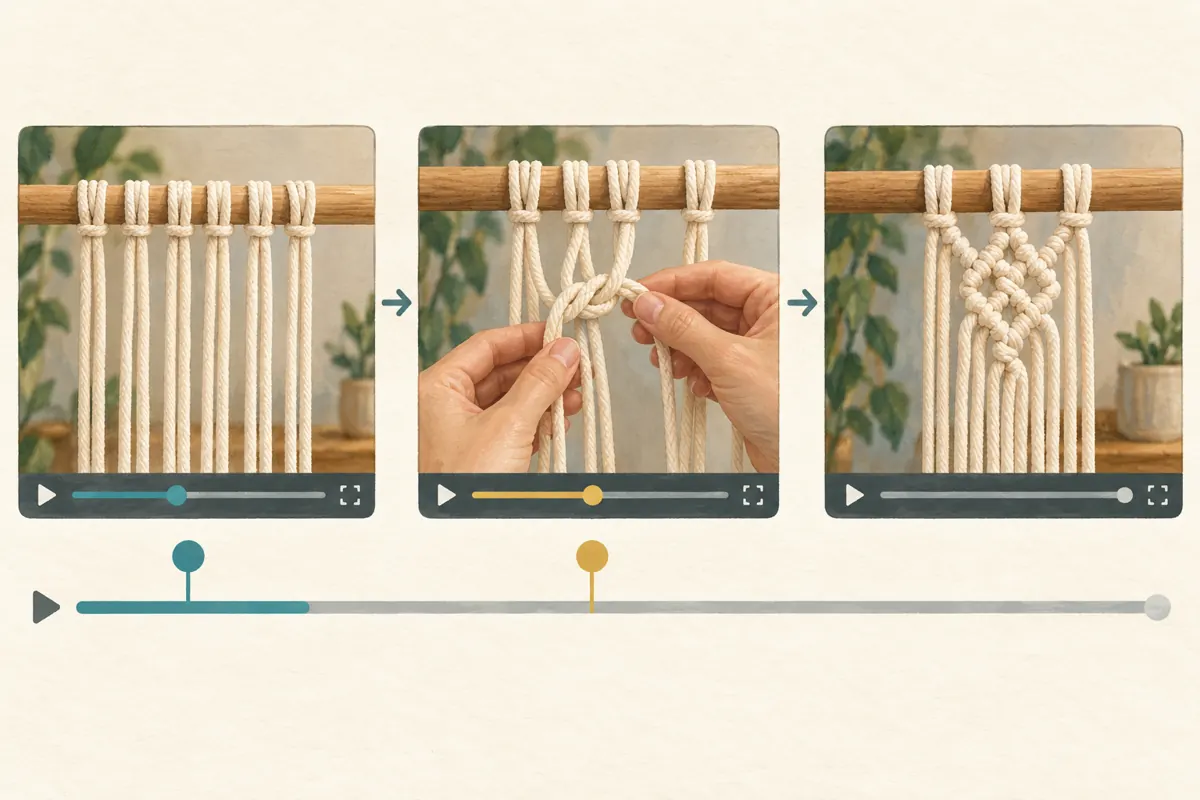
Watch the relevant passage from slightly before the confusing movement. Find the earliest moment a newcomer needs to understand the cord arrangement, hand position and direction of travel. Starting precisely when the fingers cross may hide the setup. Starting after the knot is tightened may show the result without explaining how it happened.
For a hypothetical example, suppose the movement begins at 3:18, but the instructor lays out the cords at 3:05. The workshop might choose 3:05 as the entry point and tell the customer to watch the outer cord. These times are illustrative, not recommended settings for every lesson. If the explanation depends on a previous step, either choose that earlier point or give one short prerequisite in the message. A useful starting moment is determined by comprehension, not by how dramatic the frame looks.
3. Create the link using YouTube's documented sharing controls
On a computer, open the video on YouTube and select Share beneath it. Select Start at, enter the chosen time and copy the link. YouTube documents this as the way to share a specific part of a video. Use the generated link rather than guessing how to alter its address. See [YouTube's sharing instructions](https://support.google.com/youtube/answer/57741?hl=en).
Keep the ordinary video link beside the timed version in your working notes. Label them by purpose so staff can distinguish the full lesson from the answer to a particular question. For example, use an internal label such as 'wall hanging: cord layout before second row.' Avoid labels that only make sense to the person who created them, such as 'good link' or 'latest.' The goal is for another employee to choose the correct reference during a busy afternoon without having to watch every saved lesson.
4. Write a reply that explains what the viewer will see
A bare link asks the customer to work out why you sent it. Add a brief explanation of the problem it addresses, one visual detail to notice and an invitation to clarify anything still confusing. In the hypothetical example, an English version could say: 'This part shows the cord layout before the second row. Watch which outer cord moves first. If your layout looks different, send us a close photo of your work.'
Write the actual customer reply in the language they use, including Khmer where appropriate. Have someone familiar with the craft check the terms; a literal translation of a knot name may be less useful than a clear description of the movement. Include the starting time as ordinary text as well. This gives the customer a reference if they need to find the passage manually. Keep any class invitation separate from the immediate answer so the help remains easy to follow.
5. Test the exact message on a phone
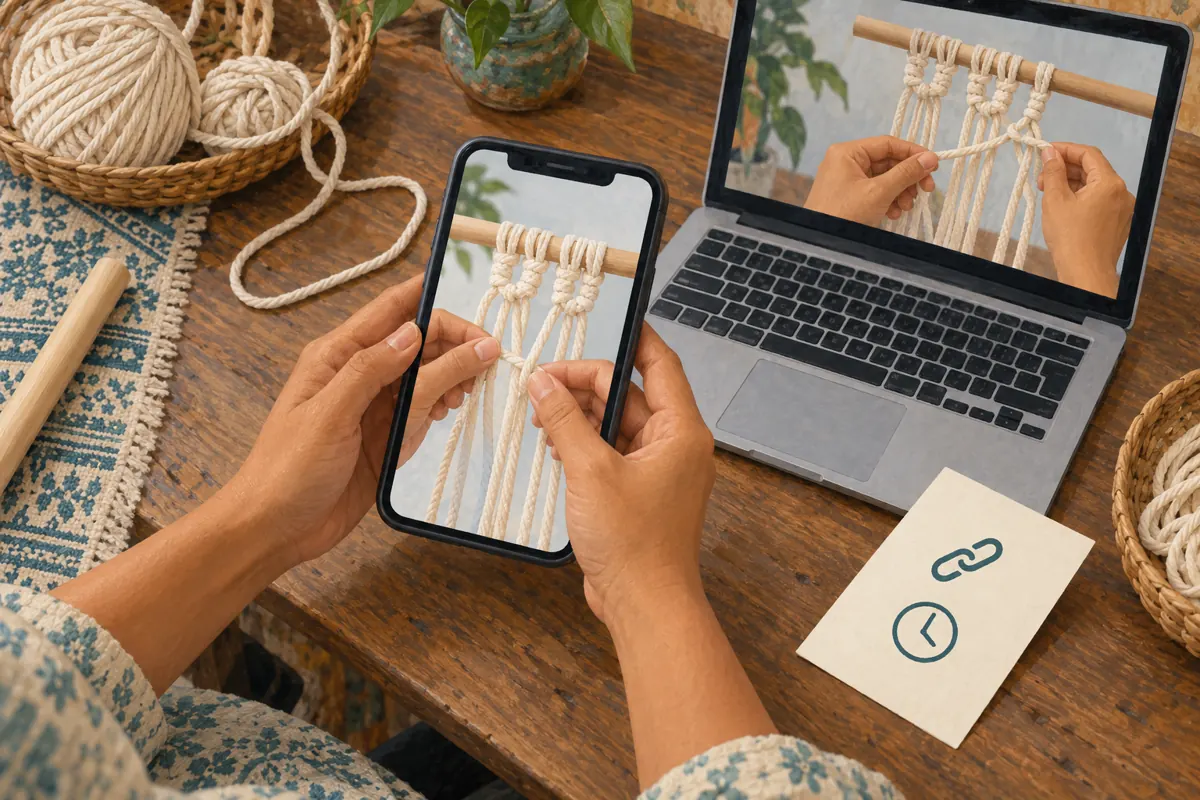
Paste the finished reply into an internal test conversation in the messaging app your team intends to use. Open that exact link on a phone and observe what happens. Check that the intended video opens, the selected passage is reached and the hand movement remains visible at a comfortable viewing size. Treat this as a practical acceptance test, rather than assuming your desktop preview represents every customer's experience.
Ask a colleague who did not prepare the reply to try it. Can they identify the cord you mention? Does the opening sentence make sense without reading the entire conversation? If the timestamp is not preserved in the tested route, retain the written time and explain where to begin. If the video itself is unclear, a different link will not solve the problem. Improve the shot, provide a useful still image or answer the question directly before promoting that passage.
6. Decide when a timed answer is the right format
Use this approach when the existing lesson contains a clear answer and the viewer already has enough background to follow it. A customer who needs to revisit one movement is a strong candidate. Someone who has never opened the kit may need the full introduction instead. Someone asking whether cord is included needs a product answer, not a knotting demonstration.
If a passage requires a long explanation before it becomes understandable, consider producing a focused follow-up lesson. Do not repeatedly send a confusing reference simply because it is already available. For a public promotional post, introduce the practical question before sharing the link: for example, invite beginners to inspect the setup before trying the second row. Keep the promise narrow. Showing a helpful teaching moment can demonstrate your approach, but it cannot prove that every beginner will master the project or want to buy a class.
7. Build a small answer library around real questions
Start with a few recurring questions rather than cataloguing every second of every video. For each answer, record the project, customer question, full video link, timed link, written starting time and a short description of what should be visible. Add the date someone last tested it. These fields make the reference usable without turning a small workshop into a complicated content operation.
Assign one person to review the entries when lessons or kits change. A revised kit may use a different cord arrangement even if the old demonstration still looks attractive. Recheck the entry before using it in a new promotion, and retire references that no longer match the product. Keep customer identities out of this reusable library. Preserve the question in general terms, such as 'cannot distinguish the working cord,' so the lesson can help others without exposing the original conversation.
8. Evaluate SMM listings against the actual task
The supplied SMMVR catalogue includes the exact public service name 'YouTube Like ~ Max 50k ~ 50k/days ~ Instant ~ 𝐍𝐎 𝗥𝗘𝗙𝗜𝗟𝗟'. Its title identifies a likes-related listing, but the supplied description is empty. The wording therefore does not substantiate delivery speed, audience location or the way engagement is obtained. It also offers no evidence that viewers will watch the selected knotting passage.
YouTube prohibits artificial increases in engagement metrics and warns that a hired promoter's actions can affect your channel. Review the actual method before considering any service; decline methods that conflict with those rules. See [YouTube's fake engagement policy](https://support.google.com/youtube/answer/3399767?hl=en).
For this workshop, the first spending decision should follow the diagnosed problem. Unclear hand movements call for better filming; unanswered questions call for staff time. Purchased engagement is not evidence of genuine interest, sales, ad delivery or Cambodian users. A timed customer-help link should never be presented as a way to make an engagement purchase educational or locally targeted.
9. Measure whether the answer helped
After sending the reference, ask a useful follow-up such as whether the cord arrangement now matches the demonstration. Record the answer conservatively: resolved, still unclear or no response. No response is an unknown outcome. A customer saying they understood the movement supports a conclusion about that conversation, not a claim that the video teaches every viewer successfully.
Keep separate records for lesson revisions, customer enquiries and any service expenditure. If someone later asks about a class, note the enquiry and whatever source they voluntarily identify. Do not automatically attribute it to the last promotion. For the hypothetical workshop, repeated confusion at the same entry point would be a reason to improve the explanation, even if the video also accumulated likes. Review the substance of the questions before deciding whether the answer library needs more entries or better existing ones.
10. Avoid shortcuts that weaken the customer experience
Common mistakes include copying a timestamp from a different lesson, starting after the essential setup and promising that the video answers more than it shows. Another is sending several near-identical links and leaving the customer to choose. Select one primary answer, explain its relevance and offer a broader lesson only when needed. Staff should also check that the kit pictured matches the kit being discussed.
Avoid turning every support exchange into a promotional message. Solve the craft question before offering an optional next step. If a customer remains confused, try a different explanation rather than resending the same reference. The workshop's strongest repeatable process is simple: identify the obstacle, choose a clear passage, test the reply and learn from the response. That process gives future social posts a practical foundation in the questions people actually ask.

Frequently asked questions
Should every customer receive the same starting time?
No. Match the reference to the obstacle and the customer's existing knowledge. A beginner may need the cord setup, while someone revisiting a familiar lesson may need a later movement. Reuse a tested answer only after checking that the project and question match.
What should a phone-only workshop do if it cannot find Start at?
The creation steps described here use YouTube's documented computer interface. If that option is unavailable in your current interface, send the ordinary lesson link with a clearly written time and a sentence describing the passage. Test that fallback instead of assuming an unfamiliar control exists.
Can a start-time link replace an unclear demonstration?
No. It can help someone reach a passage, but it cannot reveal a cord hidden behind the instructor's hand or explain a missing step. Record a clearer close-up or provide a direct explanation when the existing footage does not answer the question.
How can the workshop use helpful replies in promotion?
Turn a recurring question into a general educational post and share the relevant lesson reference. Remove identifying details from the original exchange. Describe what the demonstration teaches, then offer a relevant optional action, such as asking about kit contents. Do not invent testimonials or suggest that receiving help means someone endorsed the business.
Would buying likes show that the selected passage works?
No. A likes count does not establish comprehension, local demand or purchase intent. Evaluate the passage through specific feedback and observation of the actual difficulty. Any service evaluation also needs to consider its method and YouTube's rules; a catalogue title alone is insufficient evidence.
Explore the current service catalogue, create an account, or ask a specific question through support tickets.
Prepared with AI assistance. Illustrations explain the workflow and do not represent customer results.