
20/10/2026 23:08
Views or Measuring Requests? TikTok Promote Planning for Cambodian Curtain Shops

A curtain demonstration can attract attention without helping someone arrange a measuring visit. The viewer may like the fabric but still wonder whether your shop serves their neighbourhood, whether measuring carries a fee, and what information you need first. For Cambodian curtain businesses, those unanswered questions can make a popular-looking video commercially unhelpful. This guide explains how to connect a TikTok demonstration to a useful enquiry, decide whether website promotion fits the task, and assess SMM panel offers without confusing purchased engagement with customer demand. The running example is a hypothetical Phnom Penh curtain shop preparing to promote its measuring service; it describes a planning method, not a real campaign or promised result.
1. Define the request before choosing the promotion
Write the desired customer action in one sentence: a person within the shop’s service area requests a conversation about measuring their windows. This gives the team something more useful to evaluate than whether a video’s counter increased. Decide what makes a request relevant: a reachable contact, a location the shop can serve, and a curtain project the team can discuss. A completed enquiry form is still a request, not a confirmed appointment.
In the hypothetical shop, the owner wants households to check measuring availability before buying fabric. The campaign should therefore explain the visit process rather than advertise every curtain style. Staff first agree which areas they cover, who handles replies, and when visits can realistically happen. If those details remain unsettled, preparing the service is the next task. Paying to send more people into an uncertain booking process can simply create more unanswered conversations.
2. Distinguish an advertising objective from an engagement product
TikTok describes Promote as its in-app advertising tool. Its help material discusses goals such as visibility and website traffic. An SMM catalogue entry is a separate commercial offer and should not be treated as evidence that TikTok will deliver an advertising campaign. For a curtain shop, the important question is what action the chosen route supports and what evidence will be available afterward.
One exact public service name supplied for smmvr.com is “TikTok - Likes ~ Bot Profiles ~ Max 5M ~ 100k/Days ~ Instant ~ 𝐍𝐎 𝗥𝗘𝗙𝗜𝗟𝗟”. The title labels it as a likes service involving bot profiles; the supplied description is empty. Its advertised quantities and timing are catalogue wording, not independently verified performance. It provides no supported basis for claiming Cambodian customers, measuring enquiries or official ad delivery. TikTok’s published explanation of deceptive behaviour prohibits fake engagement and services that artificially increase engagement. Exclude artificial likes from this enquiry workflow rather than treating them as a preliminary advertising step.
3. Check what your own account can actually use
Before preparing a paid campaign, inspect the options available in the shop’s own TikTok account. This guide does not establish that every Promote objective, payment method or geographic control is available to every Cambodian account. If the needed option is absent, do not substitute a similarly named panel service and assume it performs the same function. Continue improving the video and enquiry process while checking official support.
TikTok’s Promote guidance says promoted content must be public and use original sound or sound permitted for commercial use. Review the actual video, including any music accidentally recorded in the showroom. A track being audible in an ordinary post does not establish permission for advertising. Keep the original filming files and the information needed to verify music rights. The shop should also confirm that the demonstrated fabric and measuring offer are still available before directing additional attention to them.
4. Film the reason to request a measuring visit
Build the demonstration around an uncertainty the visit resolves. For example, show how a proposed curtain position relates to the window, nearby furniture and available wall space. Explain that a visit helps the shop review the installation situation before preparing a proposal. Avoid presenting a rough measurement from a demonstration window as a universal ordering instruction. Viewers should understand both the purpose of the service and the limits of what a short video can establish.
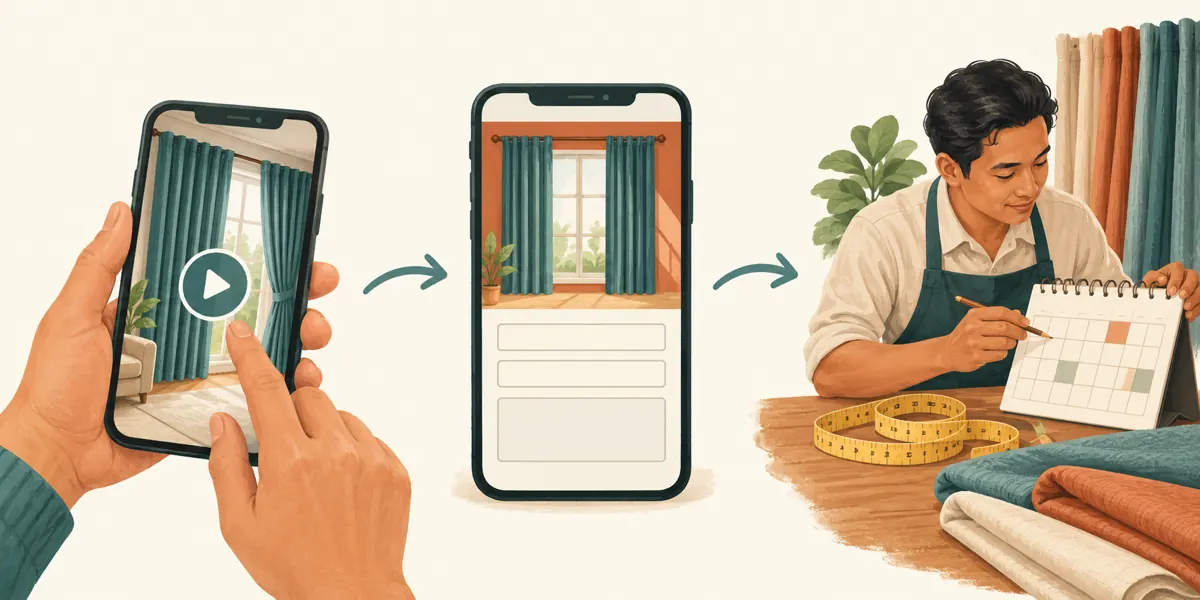
For the hypothetical Phnom Penh shop, the opening shows a window with an awkward corner. The middle explains what the team needs to inspect. The ending invites viewers to check the service area and request availability. Use Khmer narration and readable Khmer captions when that matches the intended customers; add other languages only when the team can support them. Say whether the pictured fabric is an example. Do not imply that the measuring visit includes installation or that a quotation commits the customer to an order.
5. Give visitors one useful destination
A campaign about measuring should open a page about measuring. Put the service area, visit conditions and enquiry action near the beginning. Explain any visit fee and how it relates to a later purchase using the shop’s actual policy. If the fee depends on location, explain that staff must confirm it. Avoid sending visitors to a broad catalogue where they must infer how to arrange help.
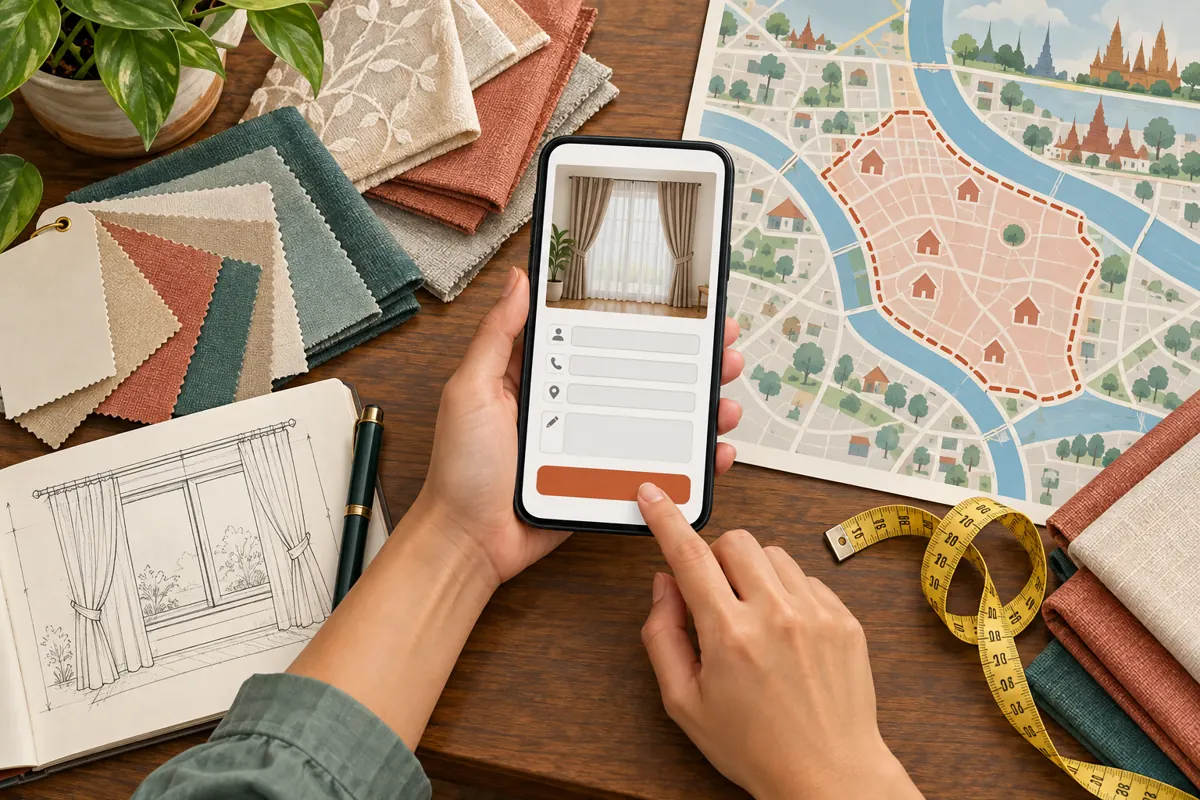
Ask only for information needed at this stage: a contact method, general location, project description and a suitable time to respond. Request detailed addresses or interior photographs later when necessary, and explain their purpose. Test the page on a phone using a normal mobile connection. Submit a clearly marked test request and verify that the responsible staff member receives it. The confirmation should say that the request was received and explain the next step; it should not announce a booked visit before anyone has checked availability.
6. Choose website visits only when the page is ready
TikTok’s official website-promotion instructions place More website visits under Get sales. The documented setup includes entering the destination URL, selecting a call to action and creative, choosing audience settings, setting budget and duration, and reviewing the promotion before payment. Check the destination and selected settings carefully in your own account. The label Get sales does not mean that every resulting visit becomes a purchase.
The same guidance distinguishes website visits from website conversions. Website conversions require an Ads Manager integration and TikTok Pixel; these are not required for the website-visits goal. For a small curtain shop with a working enquiry page, visits may be the simpler starting point. That is a workflow choice, not a promise of efficiency. Do not add tracking merely to unlock another label without understanding what event it records. A button press, a successfully submitted enquiry and a confirmed measuring appointment are different events.
7. Match the campaign to the shop’s service capacity
Use geographic controls only to the extent they are actually offered and appropriate in the account. Independently state the service boundary in the video and destination page. Someone can watch, share or open content without being a suitable local customer. A Cambodian-language presentation also does not prove that every viewer is in Cambodia or within travelling distance of the shop.
Choose a spending ceiling the business can afford without assuming any enquiries will arrive. Schedule the campaign around staffed reply periods and realistic measuring availability. In the hypothetical example, the owner reviews the appointment calendar before deciding the campaign duration. If the team becomes unable to handle new requests, review the promotion promptly and update the offer. Avoid repeatedly changing the creative, destination, audience and budget together: when everything changes, it becomes harder to explain which problem a later improvement may have addressed.
8. Follow the enquiry through to a human decision
Keep a small enquiry log that records the arrival date, stated location, contact status, project fit and next action. Use practical statuses such as awaiting reply, outside service area, discussing visit, appointment confirmed and closed. Give one staff member responsibility for each open request. The log should help the shop respond, rather than accumulate personal details that nobody needs.
Ask how the customer found the shop when appropriate, while allowing an unknown answer. A person may see a promoted video, revisit the profile later and contact the shop through another route. Do not force every enquiry into the campaign category. If website analytics or campaign tags are used, treat them as supporting evidence with limits. Review the number of relevant conversations and appointments alongside the advertising report, keeping each definition stable. Purchased engagement is not evidence of genuine interest, sales, ad delivery or Cambodian users.
9. Diagnose the missing step before spending again
If attention arrives but enquiries do not, inspect the path in order. Does the video explain the measuring service? Does the destination load and match that promise? Are the service area and fee conditions clear? Does the form work? Are replies actually reaching customers? These checks identify concrete changes without inventing a story about what an algorithm supposedly prefers.
In a hypothetical review, staff might discover that enquiries concern fabric delivery while the campaign is meant to promote measuring visits. The useful response is to clarify the offer and page heading. Another hypothetical review might reveal appropriate requests that remain unanswered because nobody owns the inbox; changing the video would not resolve that failure. Keep such observations separate from proven causes. After making one meaningful correction, review the next comparable period and record remaining uncertainty instead of announcing that the change has guaranteed better performance.
10. Avoid shortcuts that make the report look better than the service
Common mistakes include choosing a promotion because its headline quantity looks large, describing clicks as bookings, and using a full appointment calendar as proof that one campaign caused every visit. Another is advertising a broad service area that the team cannot reliably cover. Each mistake weakens the connection between what the customer was promised and what the business can deliver.
For an SMM panel customer, the decision can legitimately end with no order. If the available product does not support the business objective or conflicts with platform rules, preserve the budget for suitable work. In the campaign review, name what happened: the creative used, the destination, actual advertising spend, relevant enquiries and confirmed appointments where known. Record operational problems and unresolved attribution separately. The next campaign should begin with a better service proposition or smoother customer journey, not a requirement to display a larger engagement counter.

Frequently asked questions
Should a curtain shop choose video views or website visits?
Start with the intended action. If the immediate purpose is to explain an unfamiliar service, viewing the demonstration may be useful. If viewers should submit a measuring enquiry and the page works, a website-visits objective is more closely aligned. Neither objective establishes appointment quality; that requires reviewing actual requests.
Can the shop use this workflow without a website?
It can prepare the offer, video and response process, but the website-visits route needs a suitable destination. Use an existing contact route that customers can actually access, or prepare an enquiry page first. Do not advertise a website action that leads to an unfinished page or an unrelated catalogue.
Does the shop need TikTok Pixel just to send visitors to its page?
TikTok’s cited setup guidance says Pixel and Ads Manager integration are required for website conversions, not the website-visits goal. Even without conversion tracking, staff can review received enquiries. Keep that operational record separate from any claim about which advertising interaction caused a booking.
Can panel likes help prove that local people want the measuring service?
No. Purchased likes do not establish location, household needs, purchasing intent or willingness to arrange a visit. The supplied bot-profile likes title is particularly unsuitable as evidence of customer interest. TikTok also prohibits artificial engagement. Base service decisions on genuine questions, relevant enquiries and actual customer conversations.
What should staff do when a request comes from outside the service area?
Explain the boundary clearly and avoid promising a visit the team cannot provide. If an alternative such as a showroom consultation genuinely exists, offer it with its conditions. Record the request as outside the service area so the campaign review does not count it as an available local appointment.
Explore the current service catalogue, create an account, or ask a specific question through support tickets.
- TikTok Help Center: Use Promote to grow your TikTok audience
- TikTok Business Help Center: How to set up Promote for website visits and conversions
- TikTok Newsroom: How TikTok counters deceptive behaviour
Prepared with AI assistance. Illustrations explain the workflow and do not represent customer results.