
21/10/2026 02:24
Old Offer Still in the Demo? YouTube Trimming for Cambodian Folding-Table Shops
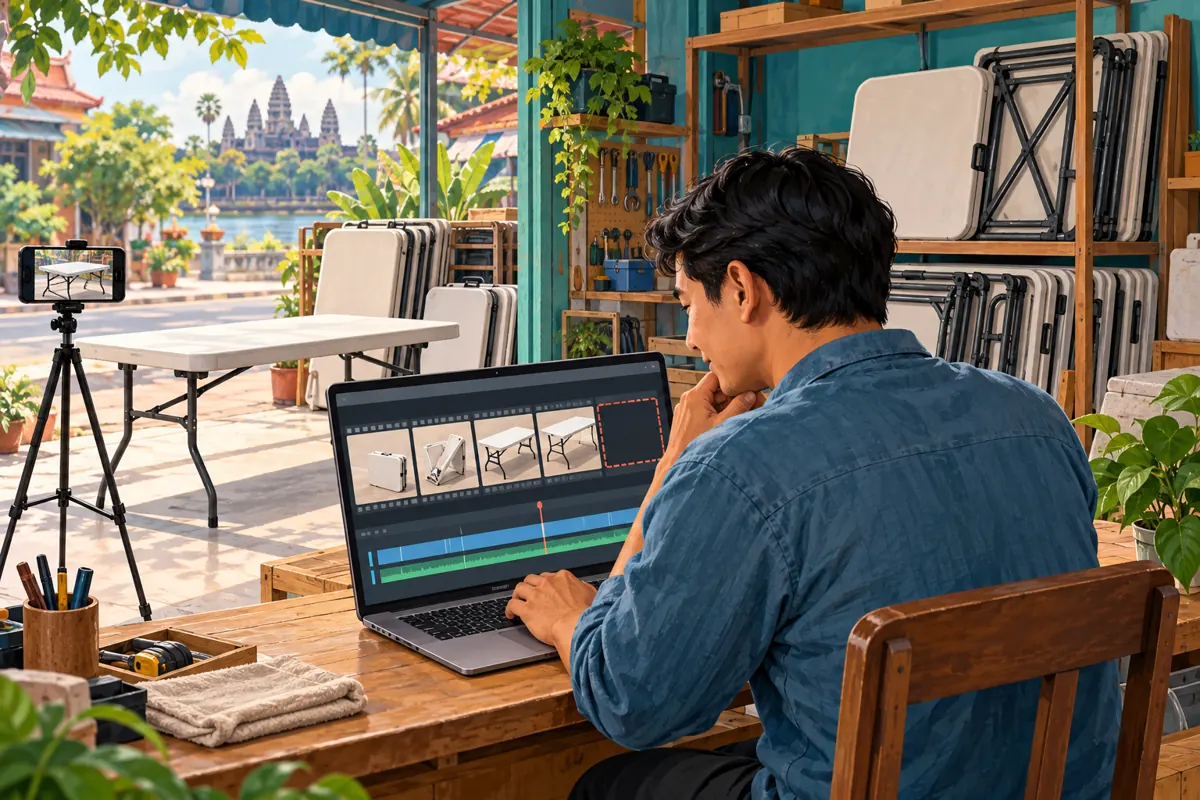
A folding-table demonstration can remain useful long after its closing offer expires. Customers still need to see the folded shape, leg mechanism and storage method, but an old delivery promise can create confusion whenever someone shares the video. For a Cambodian furniture business, the practical question is whether removing one section will leave a complete, accurate explanation. This guide follows a hypothetical shop reviewing an older YouTube demonstration before promoting it again. It explains how to plan the cut, check the remaining message, coordinate customer replies and evaluate any related SMM-panel proposal without treating purchased engagement as buyer interest.
1. Identify the exact promise that has expired
Imagine a hypothetical folding-table shop in Siem Reap. Its demonstration shows how one model opens and closes, then finishes with a temporary delivery offer. The table remains available, but that delivery arrangement has ended. A staff member wants to share the demonstration with new enquiries. Before editing, write one concrete problem statement: the final spoken offer no longer describes what the shop can provide.
Watch the whole video and list every place the offer appears. It might be spoken at the end, printed on a card near the beginning or repeated in subtitles. Check the thumbnail, description and shop-written comments separately. Removing the closing sentence cannot fix an offer that remains visible elsewhere. This inventory determines whether a simple trim can actually solve the problem.
2. Decide whether the demonstration survives the cut
Use a straightforward decision rule: trim only when the remaining footage still explains the same product honestly. An isolated closing promotion is a plausible candidate. A delivery claim woven through the demonstration needs closer review. If the presenter explains a different model, gives an incorrect dimension or demonstrates a mechanism the current product lacks, removing a few seconds may leave a misleading overall impression.
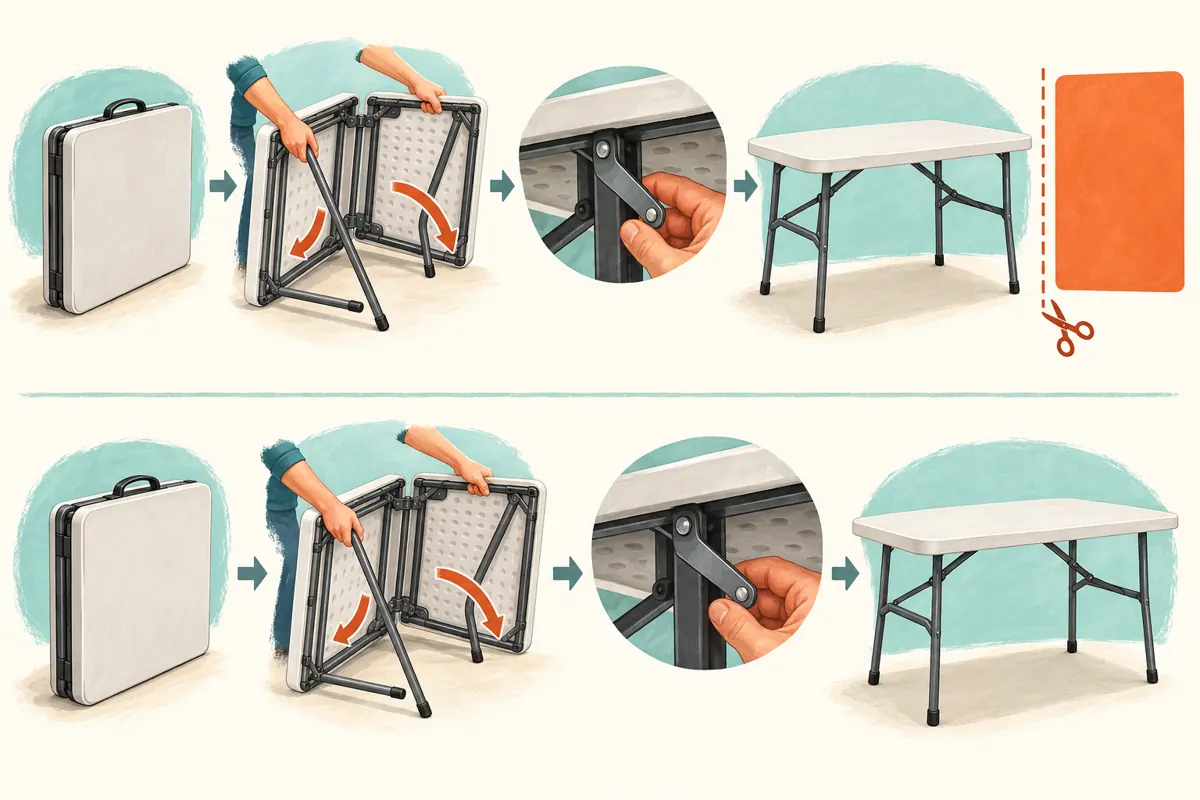
In the hypothetical shop, preserve the sequence showing the folded table, the opening action, the locking mechanism and the final standing position. Do not remove an essential step because it sits beside the expired offer. If the offer and instruction cannot be separated cleanly, prepare a replacement demonstration. The cost of filming again should be weighed against repeatedly explaining an incomplete or inaccurate video to customers.
3. Understand what YouTube's trimming tool changes
YouTube's official trimming guide says its computer editor can remove footage from the beginning, middle or end of videos shorter than six hours without re-uploading. The URL, view count and comments remain. Some unedited videos above 100,000 views face saving restrictions, with an exception for YouTube Partner Program channels.
The same guide states that saved Studio Editor changes cannot be undone through Revert to original. Keep your source footage and record the intended edit before saving. Open YouTube Studio, select Content, choose the video and open Editor. Use Trim & cut for an edge trim, or New Cut for an internal section. Preview before saving. These platform instructions come from YouTube's official guide listed in the sources; the review process below is an editorial recommendation.
4. Make a cut note another person can understand
Write down the public video URL, the reason for editing and the first and last words of the passage to remove. Add the approximate start and end positions as working references. Describe what must remain immediately before and after it. This creates a more reliable brief than telling a colleague to remove the old promotion, especially when the presenter mentions several offers.
For the hypothetical shop, the note might say: retain the final view of the opened table and remove the separate closing delivery announcement. Ask a colleague to find the same passage independently. If they choose a different boundary, clarify the note before making changes. Keep this small editorial record with the original footage so a future staff member can understand why the published demonstration ends where it does.
5. Protect meaning at both sides of the edit
Listen to the sentence before the proposed cut and the sentence after it. Removing a phrase can change a qualification into an absolute promise. For example, cutting the words that limit an offer to a particular arrangement could leave viewers believing it applies to every order. Read the remaining speech aloud as one continuous message. The new wording should stand on its own without an explanation from the editor.
Review the visual join with equal care. A jump from folded legs to a fully standing table may hide the very action customers came to understand. Preserve enough footage to show the relevant mechanism clearly, following the product's actual instructions. Do not use editing to make the table appear faster to assemble, stronger or easier to handle than the demonstration supports. Product clarity matters more than shaving off a few extra seconds.
6. Preview as a customer who has never seen the table
Run two separate review passes. First, listen with headphones and focus on clipped words, abrupt background sound and sentences that no longer connect. Second, watch on a phone and focus on whether hands, hinges and the table's orientation remain understandable. A technically neat transition can still confuse someone unfamiliar with the product. Ask the reviewer to explain what the video now tells them to do.
For a Khmer-speaking audience, have a fluent reviewer check the actual spoken meaning and any Khmer captions. An English planning note is not enough to validate a Khmer sentence boundary. Give the reviewer a specific task: identify the model, describe what is included and explain how to ask about current delivery. If their answers depend on information removed by the cut, revise the plan before saving.
7. Check everything that refers to the old version
After the edited version is available, watch the public video from beginning to end. Then inspect its description, subtitles, chapter labels and any time-specific links your shop has shared. Treat these as separate checks rather than assuming they still match. If footage has been removed, confirm that each reference leads to the intended action and that no caption continues to advertise the expired arrangement.
Review surrounding promotional material too. A Facebook caption or Telegram message may describe the old delivery offer even though its YouTube link still opens. Where you control the text, correct it clearly. Prepare a short response for customers who arrive with an older screenshot. Explain the current arrangement before accepting an order, and avoid blaming the customer for relying on information the shop previously distributed.
8. Keep the SMM-panel decision separate from the edit
The supplied SMMVR catalogue includes the exact service name “Youtube - Native Ads Views ~ 𝗥𝗘𝗙𝗜𝗟𝗟 30D ~ 10k-100k/days ~ INSTANT”. Its wording presents it as a YouTube views service, but the brief provides no supporting description. The title alone does not establish the delivery method, official advertising affiliation, Cambodian audience origin or the validity of its delivery claims. Do not fill those gaps with assumptions.
YouTube's fake engagement policy prohibits artificial inflation of views and other metrics, and says a hired promoter's actions can affect the channel. Decline a proposal that relies on artificial engagement; if the method is unclear, do not proceed until it can be assessed. Purchased engagement is not evidence of genuine interest, sales, ad delivery or Cambodian users. Improving the demonstration is useful independently of any service purchase, and a successful edit creates no obligation to order promotion.

9. Reintroduce the useful demonstration with a clear question
Once the video and surrounding details are accurate, share it where the specific explanation is relevant. For the hypothetical shop, a helpful accompanying message would identify the folding-table model and invite customers to ask about folded dimensions, availability or delivery to their area. Keep the request manageable. Someone comparing storage options should not need to provide a full address merely to learn whether the table fits their space.
Avoid announcing that the video is improved solely because it is shorter. Explain the customer benefit in concrete terms: it shows the opening mechanism and storage position. Put changeable commercial details in a clearly maintained enquiry response or current offer page. This reduces the amount of temporary information embedded in future demonstrations, while still letting customers confirm price and fulfilment conditions before deciding.
10. Review questions without inventing a performance story
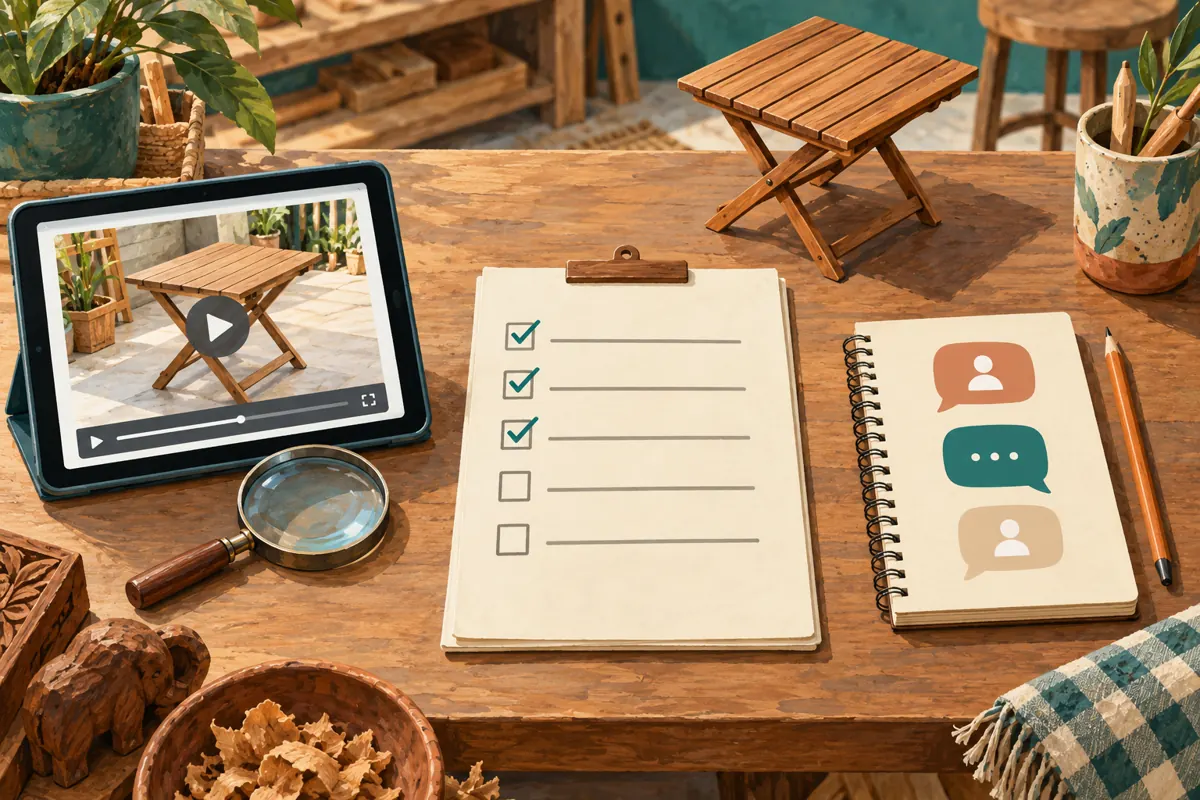
Keep a modest enquiry log after resharing the demonstration. Record the questions people actually ask, such as whether the legs lock or whether the pictured model is available. Note when someone explicitly says the video helped or confused them, without turning an isolated comment into a customer testimonial. Collect only the information needed to improve the explanation and respond to the enquiry.
A change in enquiries after editing does not establish that the trim caused it. Stock, timing, distribution and the audience may also have changed. Keep any service-order records separate from observations about customer understanding. A useful conclusion might be that staff still need a clearer folded-size image. That is more actionable than attributing sales or local demand to a view counter without supporting evidence.
11. Avoid the mistakes that create another round of work
The most expensive mistake is saving an edit before reviewing the complete remaining message. Other common problems include cutting a necessary setup step, leaving an expired offer in subtitles and keeping a thumbnail that promises something the video no longer contains. Assign one person to approve the product facts and another to review the viewing experience. In a very small shop, perform those checks at different times.
Another mistake is using an edit to conceal a substantive change. If the current table differs from the model shown, say so or make a new demonstration. If the old offer caused a specific customer misunderstanding, address that enquiry directly. Editing helps future viewers receive clearer information; it does not resolve previous conversations automatically. Keep the response factual, courteous and consistent with what the shop can actually supply.
Frequently asked questions
Should we trim the video if only the delivery offer is outdated?
A trim can make sense when the offer is isolated and removing it leaves a complete demonstration. Check for other mentions first. If the delivery promise appears throughout the video or overlaps essential instructions, a replacement recording may communicate the current situation more clearly.
What if the expired offer is spoken while the locking mechanism is shown?
Do not automatically remove both. That action may be essential to understanding the product. Review whether a clean separation is possible. If it is not, prepare a new explanation that preserves the mechanism demonstration and states current conditions accurately, rather than leaving customers to guess the missing step.
Does keeping the same video link mean old promotional messages are safe to reuse?
No. A working link only establishes that the destination opens. Read each accompanying message again for old prices, delivery promises, included accessories and references to removed footage. Reuse the message only after its wording matches the current video and the shop's actual offer.
Can a view service demonstrate that Cambodian buyers prefer the edited version?
No. A service label or delivered counter cannot establish location, buying intent or preference. Assess customer understanding through actual enquiries and carefully described feedback. Any comparison also needs to account for changes in distribution and timing, rather than assigning every difference to the edit.
How can future demonstrations avoid this maintenance problem?
Separate lasting product instruction from temporary commercial announcements when planning the script. Show the actual model and explain its relevant operation clearly. Keep delivery arrangements and short-lived offers in material the shop can maintain easily, and tell viewers how to confirm the current terms before ordering.
Explore the current service catalogue, create an account, or ask a specific question through support tickets.
Prepared with AI assistance. Illustrations explain the workflow and do not represent customer results.