
19/10/2026 07:01
One Post, Two Businesses: An Instagram Collabs Workflow for Cambodian Cafés and Makers

A café serves coffee in cups made by a local ceramic studio. Both businesses have something useful to explain, but separate promotional posts can leave customers unsure who makes the cups, where to see them and which account handles purchases. An Instagram Collab can give that shared story a clearer home. This guide follows a hypothetical Phnom Penh café and ceramic maker preparing one joint demonstration. It covers choosing the publishing account, agreeing on the message, checking acceptance and managing enquiries. For businesses considering an SMM panel, it also explains why buying likes cannot establish a partnership or demonstrate demand for either business.
1. Decide whether the story genuinely needs two authors
Start with a customer question that both businesses can help answer. In this hypothetical example, the question is: “Where can I try coffee in these handmade cups, and can I buy a cup separately?” The café can explain the drink and visiting arrangements. The maker can explain the ceramics and purchasing options. That is a concrete reason to produce something together. Simply wanting access to another account’s followers is a weaker editorial foundation.
Instagram describes Collabs as co-authored posts and Reels. After an invitation is accepted, the content can appear on each collaborator’s profile grid and reach their respective audiences. That does not promise exposure to every follower or any particular number of customers. Meta explains the feature in its [Collabs announcement](https://about.fb.com/news/2023/08/music-and-collabs-on-instagram/).
Use a normal credited post when the second business only needs acknowledgement. Choose a collaboration when both parties will stand behind the message, contribute useful information and help maintain it.
2. Choose the publishing account around customer responsibility
Decide which business will create the original post before filming. For the hypothetical café demonstration, the café is a sensible publishing lead because the visit happens there and its staff can confirm opening arrangements. If the content mainly explains custom ceramic orders, the maker may be the better lead. Make this decision around the subject and ongoing responsibility rather than the largest visible follower count.
Write a short working agreement naming the publishing lead, the other collaborator, the person approving each business’s facts and the person responsible for corrections. Include what happens if someone withdraws or the offer changes. Treat these as agreed team duties; do not assume every collaborator has identical editing controls inside Instagram.
Keep the final video, caption and approvals somewhere both businesses can retrieve. Each owner should operate their own account. A collaboration invitation is a reason to coordinate content, not a reason to exchange passwords or give an outside service account access.
3. Build the post around one understandable customer journey
Give the shared post a single main action. In the hypothetical example, the action could be visiting the café to see the cups, with separate purchase enquiries directed to the maker. Avoid presenting a café visit, pottery class, wholesale quotation and online order as equally urgent actions. Viewers should understand the first useful step without studying two profiles.
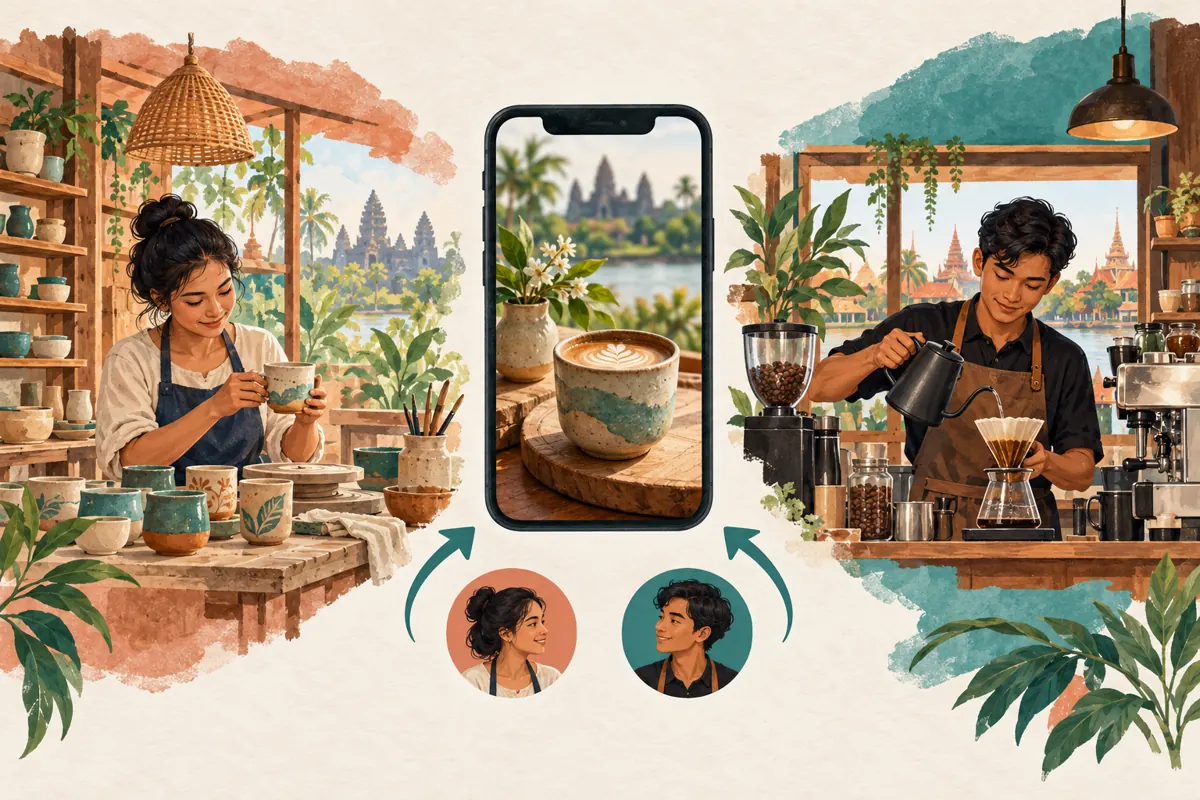
A practical video sequence shows the maker finishing a cup, the café preparing a drink and the finished cup in use. The caption then explains each business’s contribution and the next step. Verify any claims about materials, care or suitability with the maker. Attractive footage is not evidence that a cup has a particular technical property.
For Cambodian readers, put the language your actual customers use first and keep any English explanation consistent with it. Identify the relevant branch and clarify whether the cup is included with a drink or sold separately. If you mention prices, specify the currency and what each price covers.
4. Review the commercial relationship separately
Before approval, ask what each party receives. Are they simply explaining an existing working relationship, or is one receiving payment, free products or another benefit in exchange for the content? Record the actual arrangement. Do not decide disclosure requirements solely from whether anyone calls the project a sponsorship.
Meta says its paid partnership label is required for branded content involving an exchange of value, including qualifying gifted or loaned products. A collaboration should therefore receive its own disclosure review. Co-authorship does not answer that question. Consult Instagram’s [branded-content guidance](https://www.facebook.com/help/instagram/616901995832907?locale=en_GB) against the arrangement you have made.
In a hypothetical variation, the maker gives a café owner a free personal cup specifically in exchange for a promotional post. The team should address that exchange before publishing. If the relevant disclosure controls are unavailable, pause and check official guidance rather than assuming that displaying two account names resolves the issue.
5. Prepare the invitation and confirm acceptance
Have both businesses approve the exact media and caption before the publishing lead starts the invitation process. Confirm the collaborator’s precise account handle through your existing business contact. Similar display names are easy to confuse, especially when a business has an old account, a personal account and a current shop account.
In Instagram’s current publishing interface, look for the collaborator invitation option and review the selected account before sharing. Interface wording and available controls can change, so avoid building the plan around a rigid sequence of screen positions. Coordinate a time when the receiving owner can review the invitation from their own account.
After acceptance, inspect the actual post from both profiles and check the visible authorship. Keep the final public link in the shared project note. If the invitation remains unresolved, describe the status accurately and investigate the available controls. Do not repeatedly publish replacement copies just to see whether another attempt works; that can create competing posts and confused customer conversations.
6. Route enquiries without sending customers in circles
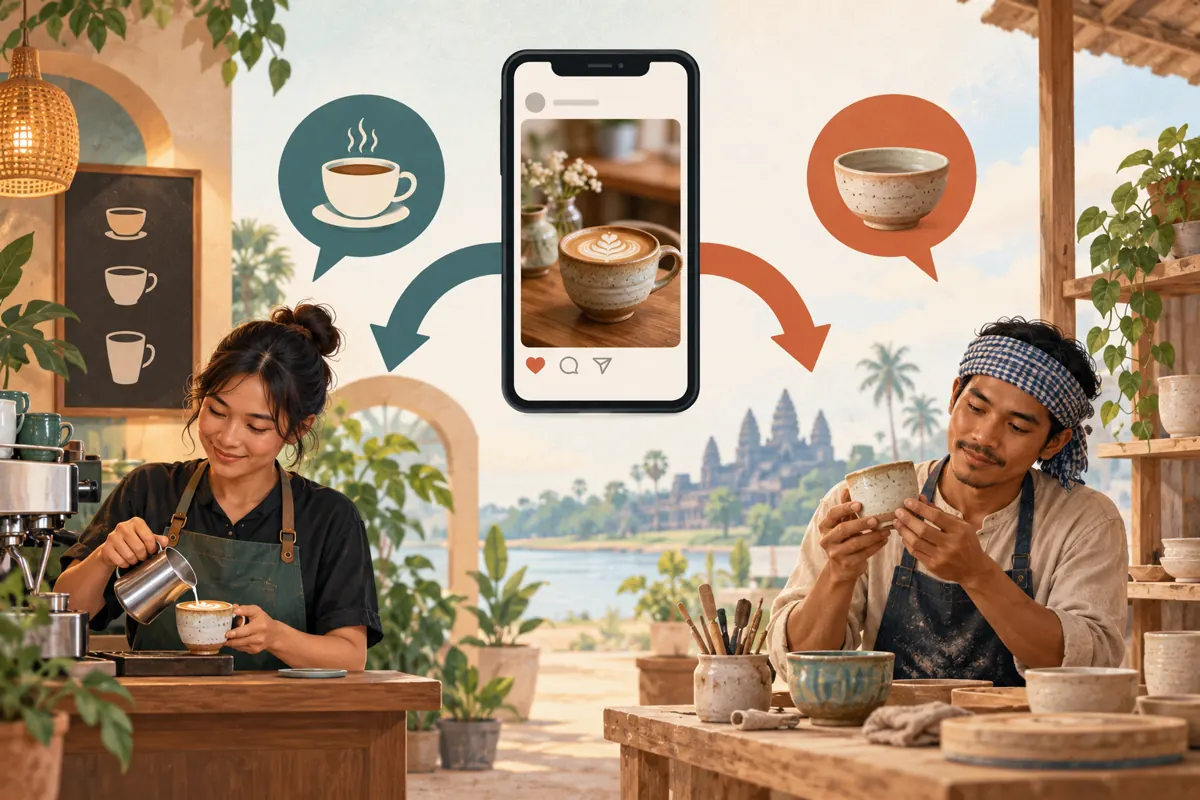
Assign questions by subject before the post goes live. The café answers opening hours, seating and drink availability. The maker answers cup stock, custom work and care instructions. Both businesses should know who handles a question involving both products, such as whether a particular cup can be reserved for collection at the café.
In a hypothetical exchange, someone asks whether they can buy the cup shown in the video. The café can acknowledge the question and explain that the maker handles ceramic sales. It should not promise stock or invent a price. If a private conversation needs to move between businesses, obtain the customer’s agreement before forwarding personal details.
Choose one person to check that public questions receive an answer. This avoids two contradictory replies or two owners assuming the other has responded. Keep a small list of unresolved topics, including what information is missing and who will verify it. A useful reply matters more than making the comment section look busy.
7. Make the SMM-panel decision with both partners
A shared post represents both businesses, so neither should quietly commission engagement on it. Discuss any proposed service before spending. The supplied SMMVR catalogue includes “Instagram Likes ~ 𝗛𝗤 𝗣𝗿𝗼𝗳𝗶𝗹𝗲𝘀 ~ Max 10M ~ 500k/day ~ Instant ~ 𝐍𝐎 𝗥𝗘𝗙𝗜𝗟𝗟”. Its name identifies an Instagram likes offer, but the supplied description is empty. The wording is not independent verification of quality, speed or delivery conditions.
Instagram’s Community Guidelines prohibit artificially collecting likes, followers or shares. For this joint campaign, the recommended decision is to avoid purchased engagement and direct effort toward useful content and customer replies. See the [Instagram Community Guidelines](https://www.facebook.com/help/477434105621119?locale=en_GB). A listing on an SMM panel does not establish platform approval.
Purchased likes would not demonstrate Cambodian viewers, genuine interest, café visits, ceramic sales or advertising delivery. They also cannot accept a collaborator invitation. If either partner already ordered a service, record that fact in the campaign notes and avoid presenting the affected engagement as independent customer approval. Do not assume cancellation or reversal is available.

8. Review business questions without double-counting the post
Agree on the review question before publication: did the shared explanation help people understand where to visit and whom to contact? Keep a modest enquiry log recording the topic, responsible business and whether the question was resolved. Avoid collecting personal information that is unnecessary for follow-up.
Treat the collaboration as one content item in the joint report. If both businesses record figures from the same post, do not add identical counts together and describe the result as extra reach. Note where each observation came from and when it was recorded. Use only the measurements each account can actually access.
Separate enquiries from purchases and purchases from attribution. A visitor may say they saw the collaboration, but that does not establish that every subsequent sale came from it. A useful hypothetical review might conclude that people understood the café location but still confused cup purchases with drink orders. That finding supports a clearer caption or follow-up explanation.
9. Prepare for stock changes and partnership withdrawal
Decide which changes require a joint review. A cup selling out, a café closing temporarily or the maker ending the arrangement can make an otherwise attractive post misleading. Ask the publishing lead to review the wording promptly, and ensure staff stop repeating outdated information while the correction is being prepared.
Keep a correction note stating what changed, which customer-facing details need updating and who checked the result. Where available controls cannot adequately correct the message, discuss removing or replacing the content. Explain changes honestly; do not preserve an inaccurate offer merely because the post has accumulated engagement.
If a partner wants to leave, resolve the practical customer questions first: whether outstanding orders remain valid, where enquiries should go and what happens to the shared material. Consult Instagram’s current controls for the account action itself. A written agreement should address business responsibilities without promising that a particular interface option will always exist.
10. Avoid the shortcuts that weaken a collaboration
The first mistake is choosing a partner because its profile looks popular while ignoring whether the offer makes sense to customers. Review the actual content, business relationship and ability to answer relevant questions. Visible engagement alone cannot tell you whether an audience is local or likely to buy.
Another mistake is treating an invitation as approval of everything that happens later. Agree separately on significant edits, reuse of the footage and any advertising proposal. A partner approving an organic post has not necessarily approved a new campaign, a different offer or a rewritten claim.
Finally, avoid declaring the collaboration successful simply because both names appear on the post. The useful test is whether the shared explanation remains accurate and customers receive coherent answers. Save what worked as a repeatable brief: a suitable joint question, clear responsibilities, approved content, confirmed acceptance and a practical review. Future collaborations can then improve without becoming copies of the same promotion.
Frequently asked questions
Should the business with more followers publish the Collab?
Not automatically. Choose the lead that can best maintain the information and handle the main customer action. For a café visit, that may be the café; for custom ceramics, it may be the maker. Consider content fit and operational responsibility before follower totals.
What if the other business cannot find or accept the invitation?
Confirm the exact invited account and have its owner inspect Instagram’s current invitation controls. Check official help if the problem persists. Keep the existing post’s status clear and agree whether to wait or use a separately approved, credited post. An SMM service cannot resolve acceptance on the partner’s behalf.
Can we use a Collab when no money changes hands?
A collaboration can be planned without a cash fee, but review the whole arrangement. Products, loans or services provided in exchange for content may still raise branded-content disclosure requirements. Record what each party gives and receives, then apply Meta’s guidance rather than using payment alone as the test.
How do we judge the post if one partner already bought likes?
Document the service and avoid treating the like total as independent evidence of customer interest. Review verifiable enquiries and completed transactions separately, with clear limits on attribution. Do not try to estimate and subtract an invented number of purchased likes to create a supposedly clean result.
Explore the current service catalogue, create an account, or ask a specific question through support tickets.
- Meta: New Ways to Create With Music and Collaborate With Friends on Instagram
- Instagram Help Centre: What is considered branded content
- Instagram Community Guidelines
Prepared with AI assistance. Illustrations explain the workflow and do not represent customer results.