
19/10/2026 17:29
From Instagram Story to Availability Request: Link Stickers for Cambodian Party-Rental Shops
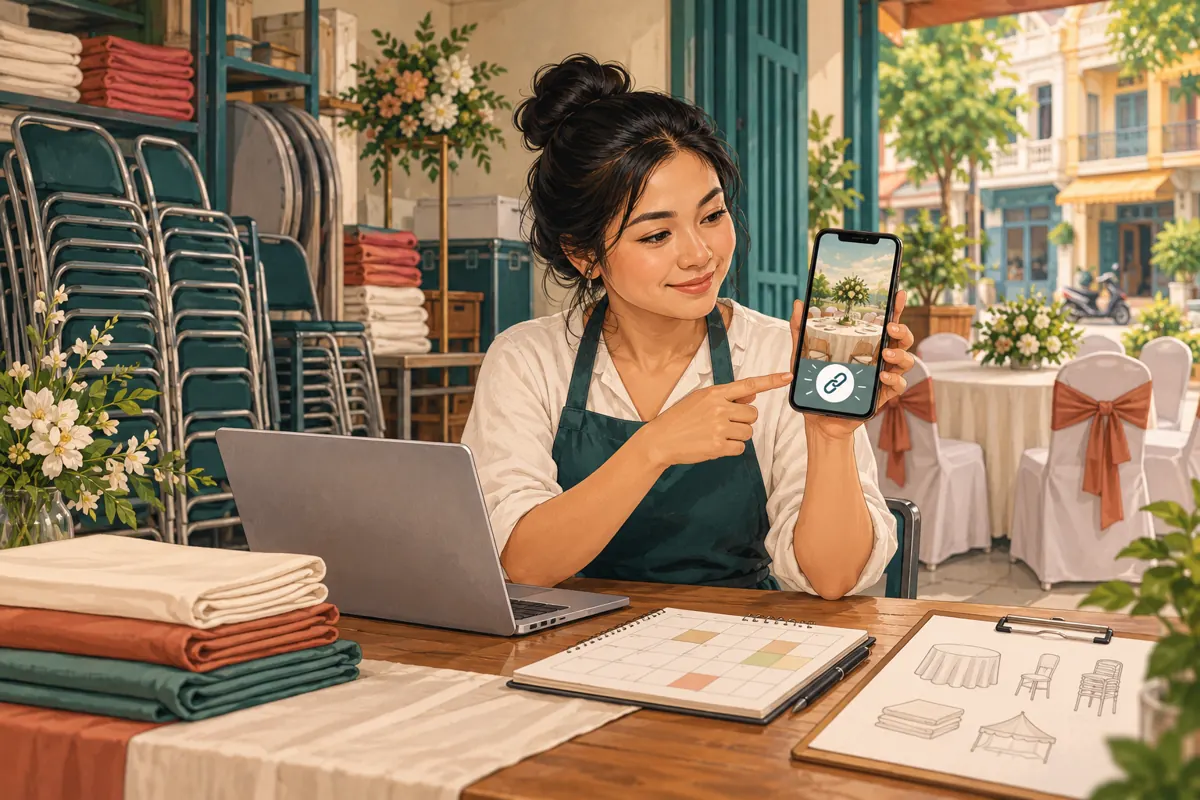
A photograph of neatly arranged chairs can attract attention without answering the question that matters to a rental customer: can this shop supply my event? For Cambodian party-equipment businesses, an Instagram Story link can move viewers toward a useful availability request. That transition needs careful wording, a suitable destination and someone ready to check the details. This guide uses a hypothetical Phnom Penh rental shop to explain the complete workflow. It also shows where SMM panel services differ from the work of collecting genuine enquiries, checking stock and confirming a booking.
1. Choose the question the Story should resolve
Begin with one rental decision. A Story about folding chairs should help someone ask whether those chairs are available for their event date and location. A Story showing several unrelated packages gives the viewer more work before they can enquire. Select one equipment family, one representative photograph and one next action that staff can handle.
In our hypothetical example, the shop supplies chairs and tables for small gatherings in Phnom Penh. Its immediate objective is to receive enough information to assess availability. It is not promising that every pictured item is free on every date. Write this distinction into the campaign brief so the photographer, person posting and person answering requests share the same expectation.
2. Understand the link sticker’s limited job
Meta’s official introduction explains that Instagram’s link sticker lets a Story open an external destination. Its documented process is to create the Story, open the sticker tray, choose the link sticker, enter the URL and position it. Check the controls available in your own app before preparing the final creative; the announcement also identifies access exceptions for some accounts.
The sticker provides a route. It does not check rental inventory, calculate transport costs or hold equipment. Choose wording around it that describes the next step accurately. In this scenario, “Request availability” is clearer than “Book now” when a staff member must still review the request. Keep that distinction on the destination page and in the acknowledgement too.
3. Decide whether to link to a page, form or conversation
Use a product page when customers need dimensions, package contents or delivery conditions before enquiring. Use a short form when staff repeatedly need the same information to check stock. A conversation route can suit unusual requirements, provided the shop has a tested contact link and someone responsible for replies. Choose according to the customer’s task and the shop’s capacity.
For the hypothetical chair campaign, a short availability form is a sensible starting point. The visitor already sees the equipment in the Story; the form gathers the event details. Avoid sending that person to a broad homepage where they must rediscover the chairs. If a dedicated page is unavailable, make the selected destination identify the same equipment immediately.
4. Gather enough information without creating a long application
Ask for the event date, equipment type, approximate quantity, delivery area and a preferred contact method. Explain any distinction between the event date and the delivery date. A customer might need setup the previous afternoon, which changes the rental schedule. Include space for that detail without forcing every visitor through questions intended for a large event.
For Cambodian customers, accept a useful district or locality description before demanding an exact delivery pin. Staff can clarify access and unloading arrangements later. Use the language your intended customers understand, and check Khmer wording with a fluent reviewer when preparing the actual form. Collect only information needed for this stage; identity documents and payment screenshots are unnecessary for an initial availability enquiry.
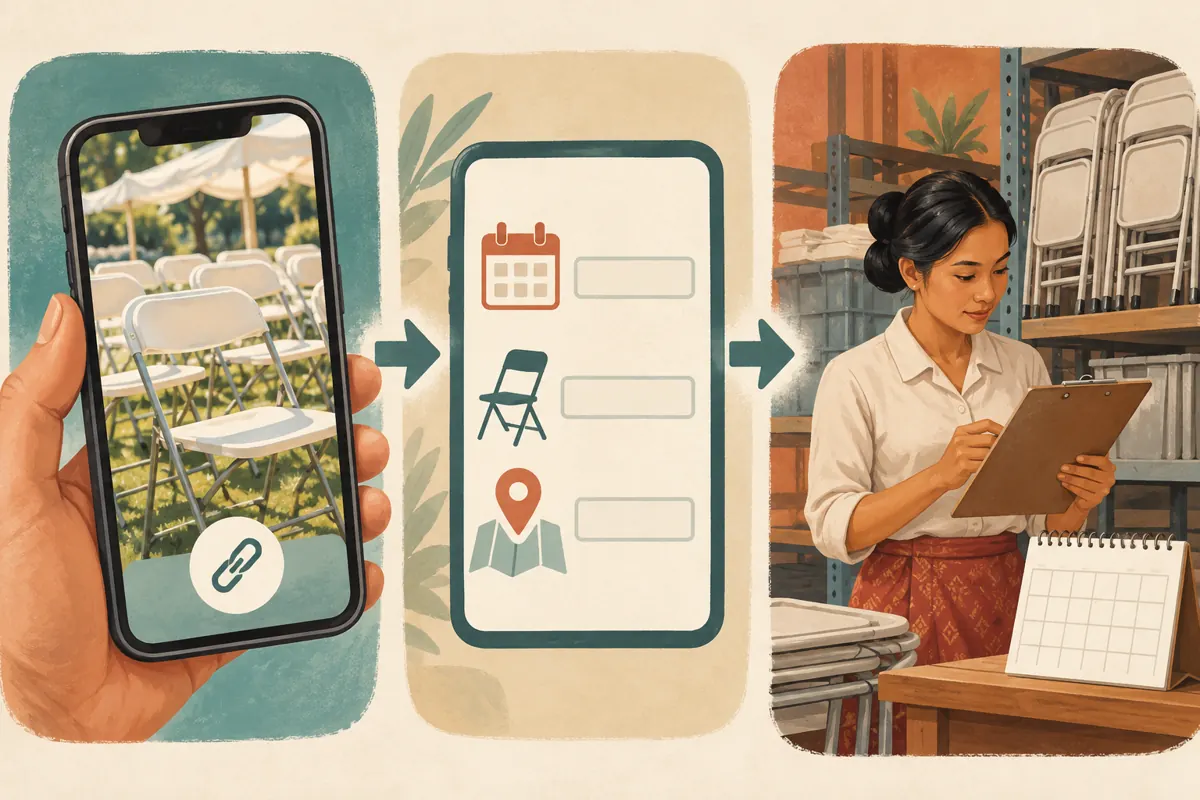
5. Make the Story explain what the viewer will find
Show equipment that the shop actually supplies, with permission to use the photograph. If the image includes decorative flowers, tableware or venue furniture outside the rental package, identify those exclusions. A beautiful event photograph can otherwise imply that every visible object is included. Prefer a composition where the equipment remains recognisable on a small phone screen.
Keep the message focused: identify the equipment, explain the action and state that availability requires confirmation. Place the sticker where it is easy to notice without hiding the product. In a hypothetical English-language draft, the surrounding copy could read: “Planning a gathering? Send your date, chair quantity and delivery area. We will check availability.” Adapt the wording for the audience rather than squeezing multiple languages into tiny text.
6. Test the whole journey on a customer’s phone
Before public promotion, open the destination on a phone where the website editor is not signed in. Confirm that the page is public, the equipment matches and the form can be completed without staff permissions. Test a slower mobile connection as well as shop Wi-Fi. Large decorative images can make an otherwise short enquiry feel difficult.
After placing the link, check it from a viewer account and submit a clearly labelled staff test. Verify that the right person receives the request and that the acknowledgement describes what happens next. Test an incomplete submission too: a missing event date should produce an understandable instruction. Remove staff test entries from business reporting, and record any fault before sending more people through the same route.
7. Give every genuine enquiry a clear next step
Assign one person to review incoming requests during the stated response hours. Their first task is to check the date, stock and transport capacity together. Available chairs are not enough if the delivery team cannot reach the venue in time. Record the enquiry as awaiting review until those checks have happened, rather than marking it booked when the form arrives.
A hypothetical acknowledgement could say: “Thank you for your request. We will check the equipment and delivery arrangements during our opening hours. Your items are not reserved yet.” The human reply should then identify the requested equipment, clarify missing details and explain the shop’s actual confirmation process. Avoid collecting a payment simply because a form submission exists; first establish what the shop can supply and on what terms.
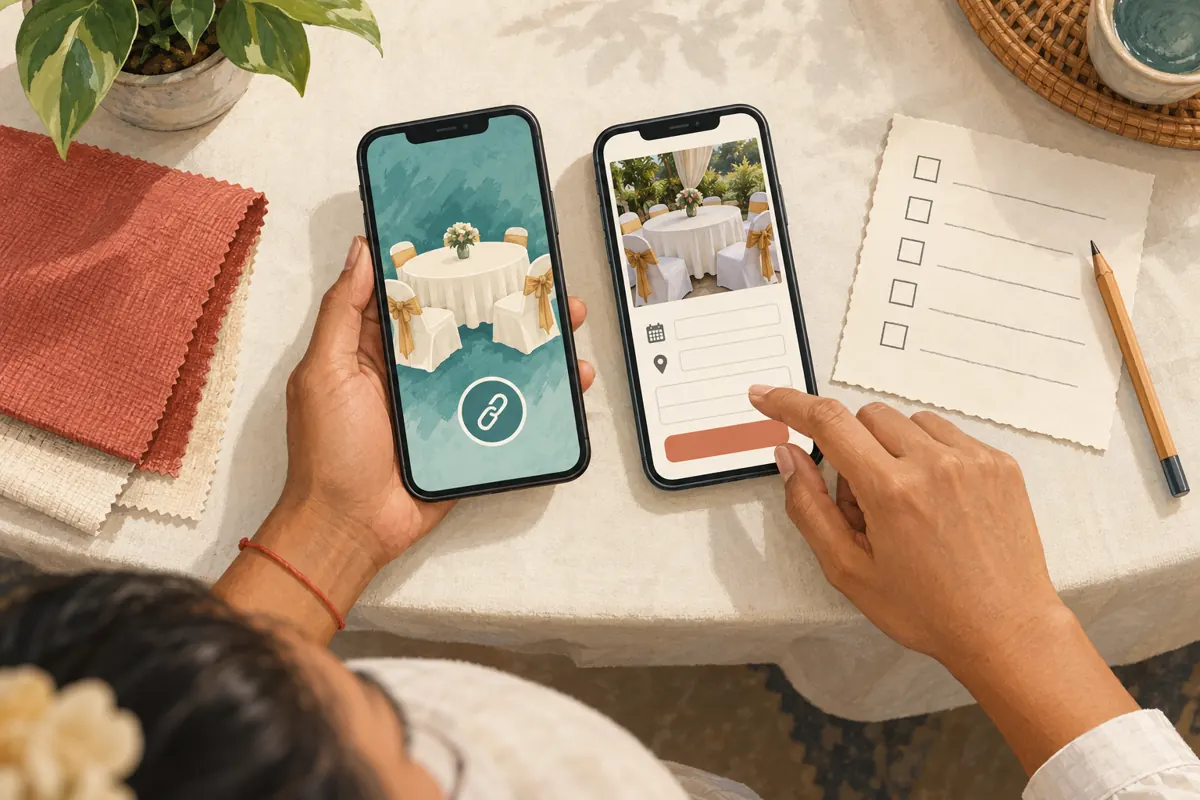
8. Evaluate SMM panel offers against this specific need
The supplied SMMVR catalogue includes “Instagram Followers ~ 𝗢𝗹𝗱 𝗔𝗰𝗰𝗼𝘂𝗻𝘁 ~ Max 1M ~ 50k-100k/days ~ Instant ~ 𝐍𝐎 𝗥𝗘𝗙𝗜𝗟𝗟”. Its title presents a follower service, while the supplied description is empty. Treat the wording as a catalogue label, not independent verification of account characteristics, delivery speed or audience quality. Nothing supplied establishes that this service collects rental availability requests.
For this campaign, the service therefore fails the relevance test. Purchased engagement is not evidence of genuine interest, sales, ad delivery or Cambodian users. Instagram’s published guidelines also prohibit artificially collecting likes, followers or shares. A shop can use an SMM panel comparison process responsibly by deciding that no listed offer fits the task and directing effort toward useful content, a working destination and timely replies.
9. Diagnose problems without confusing the stages
Keep separate records for the Story, completed enquiries, quotations and confirmed rentals. If your available reporting shows link activity, treat it as navigation activity rather than a booking count. A person may open the page to compare options, return later or decide the delivery area is unsuitable. These are different outcomes, and the records should preserve that distinction.
Use the point of difficulty to choose the next improvement. Repeated questions about what is included suggest unclear content. Incomplete forms may call for simpler fields or better instructions. Requests outside the delivery area suggest that geographic information should appear earlier. Enquiries that cannot be fulfilled may indicate stock or scheduling constraints. None of these observations establishes that buying followers would address the underlying problem.
10. Keep the destination accurate as availability changes
Rental stock is tied to dates, so a generic photograph should not imply permanent availability. Keep the destination’s wording conditional unless the shop has a dependable live availability system. When a promoted package changes, review the photograph, inclusions, form choices and staff reply together. Changing only the page title can leave customers requesting an old combination of equipment.
Common mistakes include linking to an editing preview, requiring an unexpected login, hiding delivery exclusions below a long gallery and using a submission message that says “confirmed” too early. Another is leaving nobody responsible for the inbox. Before repeating the promotion, walk through the customer’s route again and verify that the promised response remains realistic for the team’s current workload.
Frequently asked questions
Should a small rental shop build a website before using a Story link?
A large website is unnecessary for this workflow. A clear, publicly accessible page or form can be sufficient if it identifies the business, explains the equipment and routes requests reliably. Test the complete customer experience first. If the available destination is confusing or inaccessible, improve it before making the link the centre of the promotion.
What should we do if the link sticker is missing?
Check the Story sticker tray in your current app and consult Instagram’s official help for the account. Meta’s introduction documented exceptions affecting some accounts, so avoid assuming access is guaranteed. Do not buy followers as a remedy. Until the feature is available, use a clearly explained contact route that you have personally tested.
Can the form promise a quotation immediately?
Only promise a response your actual process can deliver. An automatic acknowledgement can confirm receipt, but a rental quotation may require checking quantities, dates, transport and setup needs. State the review process and realistic response hours. If the shop provides an estimate before those checks, label it as an estimate and explain what remains unresolved.
How should we handle customers who message instead of completing the form?
Answer through the channel they chose and collect the same essential details conversationally. Do not force someone to repeat information already supplied. Create one enquiry record so a message and a later form submission do not become duplicate requests. Ask a clarifying question when the dates or quantities differ rather than guessing which version is correct.
How can we tell whether the Story produced a useful enquiry?
Use a simple campaign reference in your own form or ask how the customer found the shop. Assess whether the request contains actionable details and falls within the service area. Attribution can remain uncertain when people share links or return later. Record that uncertainty instead of assigning every new enquiry to the latest Story.
Would more purchased followers make the rental offer more trustworthy?
A follower total does not establish equipment condition, delivery reliability or local customer experience. Build confidence with accurate photographs, clear inclusions, realistic response commitments and consistent handling of requests. Purchased engagement cannot verify Cambodian demand, and artificial collection conflicts with Instagram’s published guidelines. For this workflow, fixing a broken enquiry route is the more relevant operational task.
Explore the current service catalogue, create an account, or ask a specific question through support tickets.
- Meta: Introducing Instagram Story Link Stickers to All Users (Japanese-language announcement)
- Instagram Community Guidelines: Artificial Engagement and Spam
Prepared with AI assistance. Illustrations explain the workflow and do not represent customer results.